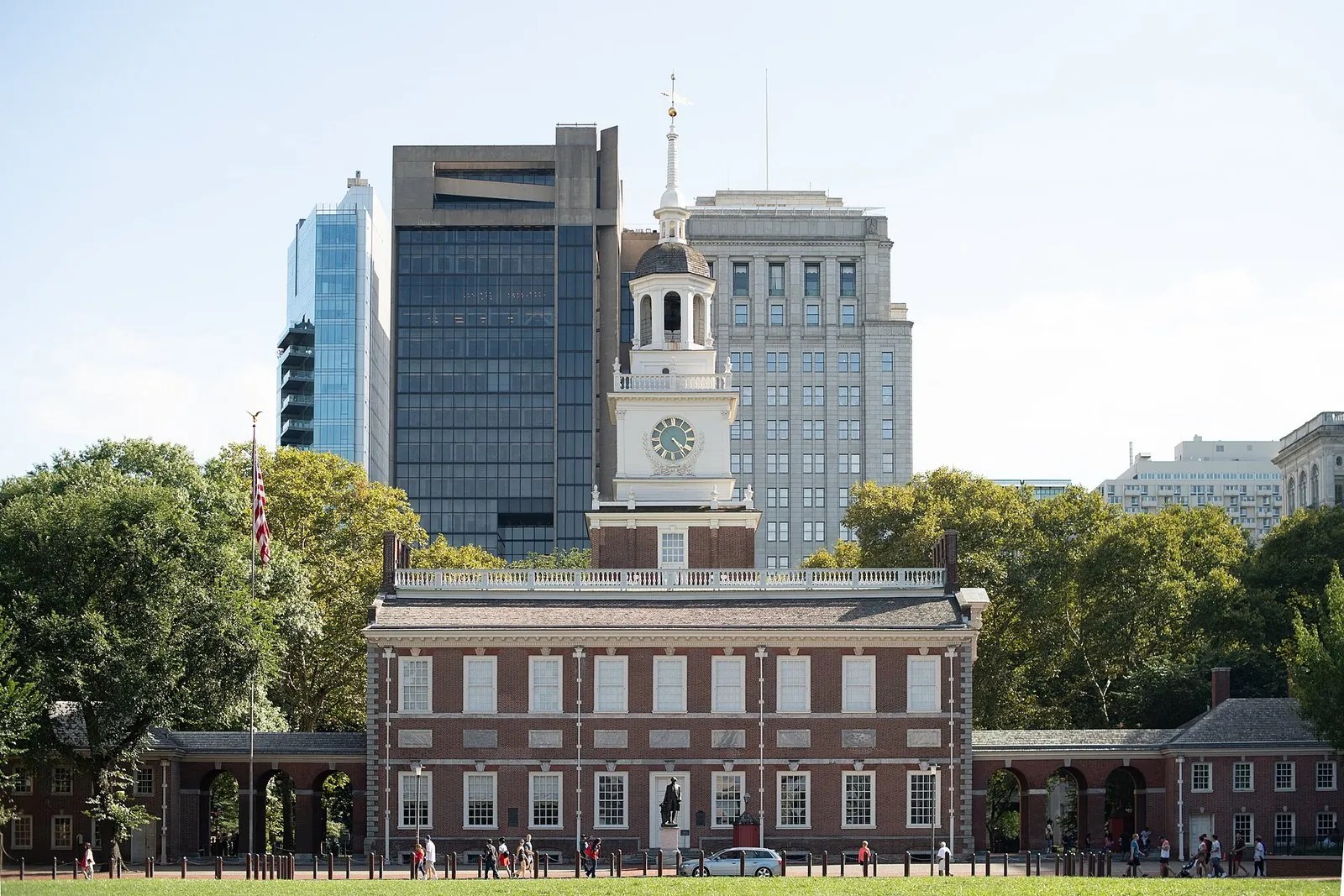
In one plain, paneled room on Chestnut Street, delegates adopted the Declaration of Independence in 1776 and wrote the Constitution in 1787, and you can stand in it for a $1 booking fee, or for nothing if you come early. That’s the core of Independence National Historical Park, the National Park Service’s collection of buildings in Old City and Society Hill, but it isn’t the whole of historic Philadelphia. Within a 15-minute walk there are colonial churches, Benjamin Franklin’s grave, the oldest residential street in the country and the site of the house where George Washington kept enslaved people. This guide covers 40 of them, with the ticket rules, hours and how long each one takes.
Quick answer: See Independence Hall on a free timed ticket from Recreation.gov ($1 fee), or walk in without one during the 9 to 10:30am open house; the Liberty Bell across the street is free with no ticket. Add Congress Hall, the Benjamin Franklin Museum and the Museum of the American Revolution, then walk north to Christ Church, the Betsy Ross House and Elfreth’s Alley. One full day covers the highlights; two days lets you do them properly.
Last updated September 24, 2026. Hours, tickets and closures were checked that day against the National Park Service’s Independence NHP pages (updated September 20, 2026) and the museums’ and churches’ own websites.
- Independence Hall: free timed tickets on Recreation.gov carry a $1 fee each. A no-ticket open house runs 9 to 10:30am, and ticketed tours run every 20 minutes from 10:40am to 4pm.
- New for 2026: the First Bank of the United States is open Thursday to Monday, and Independence Hall’s West Wing now holds the Legacies of Independence exhibit.
- Closed or changed: Philadelphia Mint tours have been suspended since March 9, 2026 for renovations. The African American Museum in Philadelphia closed on September 7 for an exhibition changeover. City Tavern is a historic site, not a working restaurant.
- The National Constitution Center is now open Wednesday to Sunday, not daily.
On this page: At a glance | Tickets and security | Independence Mall | Franklin Court and the banks | Old City | Society Hill | Black history | Access and kids | One-day plan | What’s changed | FAQ
Independence National Historical Park at a Glance
These are the sites most visitors should plan around, with the rules as of late September 2026. Everything run by the Park Service is free; the private museums charge admission.
| Site | Tickets | Hours (September 2026) | Time needed |
|---|---|---|---|
| Independence Hall | Free timed ticket ($1 fee); none for the 9-10:30am open house | Daily; tours 10:40am-4pm | 45 minutes with security |
| Liberty Bell Center | Free, no ticket | Daily 9am-5pm | 20-40 minutes plus the line |
| Congress Hall | Free; ranger tours | Daily; open house 9-10:30am, tours to 4:40pm | 20 minutes |
| Benjamin Franklin Museum | Free | Daily 9am-5pm | 1 hour |
| President’s House Site | Free, open-air | Daily 7am-10pm | 20 minutes |
| Carpenters’ Hall | Free | Tuesday-Sunday 10am-4pm | 20 minutes |
| First and Second Banks | Free | Thursday-Monday | 30 minutes each |
| Museum of the American Revolution | Paid | Daily 10am-5pm | 2-3 hours |
| National Constitution Center | Paid | Wednesday-Sunday 10am-5pm | 2-3 hours |
| Christ Church and Burial Ground | Check at the door | Daily 11am-5pm | 45 minutes |
| Betsy Ross House | Paid | Daily tours | 45 minutes |
| Elfreth’s Alley Museum | $3 adults, $2 ages 7-12 | Friday-Sunday noon-4pm | 30 minutes |
How Tickets, Security and Hours Work
Independence Hall is the only park building that needs a ticket. Tours use free timed tickets from Recreation.gov, and each ticket carries a non-refundable $1 administrative fee, up to nine per account. If you’d rather not book, come early: from 9 to 10:30am the hall runs a no-ticket open house. After that, ticketed tours leave every 20 minutes from 10:40am to 4pm, and a 4:20pm expanded tour goes further into the building, though it isn’t wheelchair accessible. The Philadelphia Visitor Center also hands out same-day tickets when they’re available, but in busy seasons they go early.
Everything on Independence Square goes through one security checkpoint. Independence Hall, Congress Hall and the West Wing share a security entrance on the south side of Independence Hall, reached by stairs or a ramp on 5th Street between Chestnut and Walnut. Screening closes at least 15 minutes before the buildings do, so don’t arrive for a 4pm tour at 3:59. The Liberty Bell Center has its own screening, which closes a few minutes before its 5pm closing time. Leave large bags at the hotel: they slow the line and some aren’t allowed.
Getting there. SEPTA’s L line (the old Market-Frankford Line) stops at 5th Street/Independence Hall and 2nd Street, and the whole area is walkable from Center City in 15 to 25 minutes. The seasonal PHLASH visitor shuttle runs on weekends this fall, with a $5 one-day pass. Driving in? The Independence Visitor Center has an underground garage, and there are several others nearby; expect city garage prices. From Harrisburg it’s about 2 hours by car, and from Pittsburgh about 5.
Start at the Independence Visitor Center at 6th and Market (daily 9am-6pm; the Park Service desk closes at 5pm). It has maps, restrooms, same-day Independence Hall tickets when available and a desk for the free ranger programs, including a daily 10am walking tour that leaves from the Liberty Bell Center’s viewing window.
Independence Mall and Independence Square
Independence Mall runs three blocks north from Chestnut Street to Race Street, between 5th and 6th, with Independence Hall and its square at the south end. The park’s headline sites are all here; plan on half a day.
1. Independence Hall
Free timed ticket ($1 fee); open house 9-10:30am. Built as the Pennsylvania State House, this is where the Second Continental Congress adopted the Declaration of Independence on July 4, 1776, and where the Constitutional Convention met in the summer of 1787. The tour’s heart is the Assembly Room, set up as it was for those debates, with George Washington’s “rising sun” chair at the front; across the hall is the colonial Supreme Court chamber. It’s a World Heritage Site and a surprisingly small building, which is part of the power of it. Rangers are good at bringing the arguments to life in a few minutes.
Plan it: Chestnut Street between 5th and 6th. Enter through the Independence Square security entrance on 5th Street. Tickets on Recreation.gov, or come for the no-ticket open house from 9 to 10:30am; tours every 20 minutes from 10:40am to 4pm, plus a 4:20pm expanded tour, as of September 2026 (NPS hours and seasons). Allow 45 minutes. Best for: everyone.
2. Liberty Bell Center
Free, no ticket; daily 9am-5pm. The bell hangs in a glass pavilion with Independence Hall framed in the window behind it, which makes the shot every visitor wants. The exhibits on the way in are the part people rush and shouldn’t: they explain how a cracked State House bell with the inscription “Proclaim Liberty throughout all the Land” was adopted by abolitionists in the 1830s and named the Liberty Bell, long before it became a national symbol. The line is shortest first thing in the morning and in the last hour before closing. If you only want a look, the bell is visible through the glass from Chestnut Street at any hour.
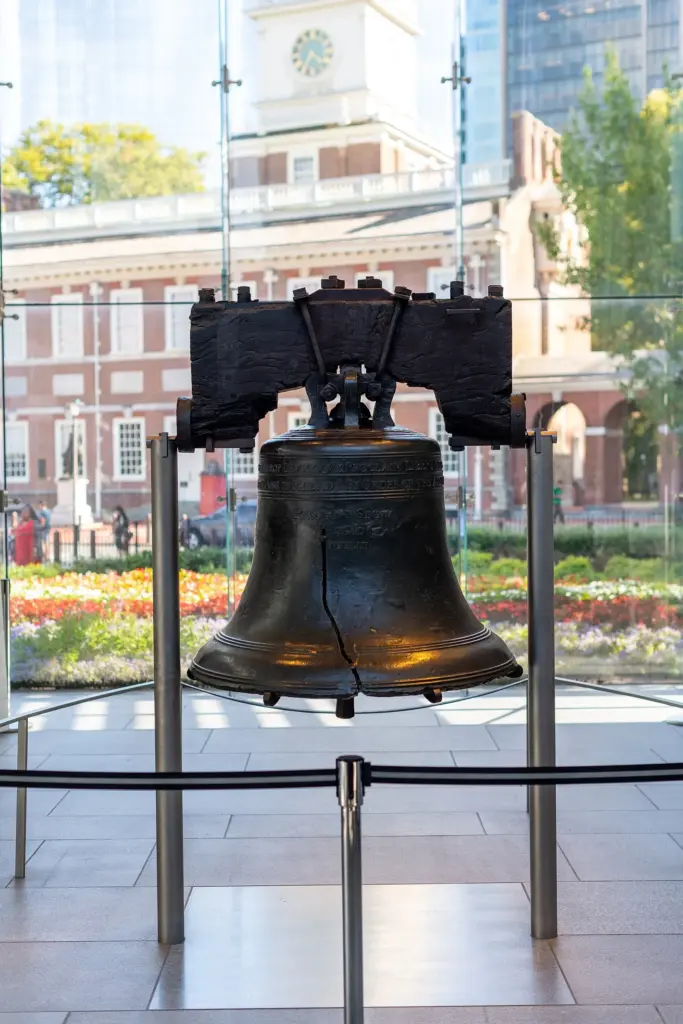
Plan it: Market Street between 5th and 6th. Free; security screening closes a few minutes before 5pm. Check NPS alerts for short closures. Allow 20-40 minutes plus the line. Best for: everyone.
3. Congress Hall
Free; ranger tours every 20 minutes. When Philadelphia was the national capital from 1790 to 1800, the new US Congress met here, next door to Independence Hall. It’s where George Washington was inaugurated for his second term and John Adams for his first, and where Washington handed over power peacefully in 1797, a precedent that mattered as much as any document. The House chamber downstairs and the more elegant Senate chamber upstairs are both restored to that decade.
Plan it: 6th and Chestnut streets, inside the Independence Square security area. Open daily: open house 9-10:30am, then ranger tours every 20 minutes from 10:40am to 4:40pm. Allow 20 minutes. Best for: history fans, anyone who finds Independence Hall too crowded.
4. Old City Hall
Free; daily 9am-5pm. On the other side of Independence Hall, Old City Hall housed the US Supreme Court from 1791 to 1800. Its restored Supreme Court chamber is small and quiet, and the rangers here tend to have time to talk, which is reason enough to stop.
Plan it: 5th and Chestnut streets. Free; Supreme Court Chamber open daily 9am-5pm. Allow 15 minutes. Best for: law and history buffs.
5. Legacies of Independence, West Wing
Free; daily 9am-5pm. The West Wing of Independence Hall used to hold the Great Essentials exhibit, and the Park Service now lists it as the Legacies of Independence exhibit. It sits inside the Independence Square security area, so see it before or after your Independence Hall tour rather than going through screening twice.
Plan it: West Wing, Independence Square. Free. Allow 15 minutes. Best for: combining with your tour.
6. Philosophical Hall and the American Philosophical Society Museum
Free; Wednesday-Sunday 10am-5pm. Benjamin Franklin founded the American Philosophical Society in 1743 to share useful knowledge, and its 1789 hall on Independence Square still belongs to the society. The small museum rotates exhibitions drawn from its collections of manuscripts, scientific instruments and art, and it’s one of the least crowded doors on the square.
Plan it: 104 South 5th Street. Free; Wednesday-Sunday 10am-5pm. Allow 30 minutes. Best for: science and book lovers.
7. The President’s House Site
Free, open-air; daily 7am-10pm. At 6th and Market, beside the Liberty Bell Center, stand the outlines and exhibits of the house where Presidents Washington and Adams lived when Philadelphia was the capital. It’s also where Washington kept nine enslaved people, including Ona Judge, who escaped in 1796 and never went back. The memorial tells their stories in panels and short videos, a few steps from the building that celebrates liberty, and it’s the most important stop in the park for understanding what the founders didn’t finish. Nearby, the 5th Street/Independence Hall subway station carries a large mural of Ona Judge.
Plan it: 6th and Market streets. Free and open-air, daily 7am-10pm. Allow 20 minutes. Best for: everyone, especially before the Liberty Bell.
8. Independence Visitor Center
Free; daily 9am-6pm. More than a ticket desk: the visitor center has exhibits and films, restrooms and a garage underneath, and the Park Service desk (until 5pm) is where you’ll find same-day Independence Hall tickets when they’re available and the day’s ranger programs. It’s the right first stop and the right place to regroup at lunch.
Plan it: 6th and Market streets. Free; daily 9am-6pm. Allow 20 minutes. Best for: orientation.
9. National Constitution Center
Paid; Wednesday-Sunday 10am-5pm. At the north end of Independence Mall, this is the park’s big modern museum, though it’s run separately, not by the Park Service. Admission includes Freedom Rising, a live theatrical show that opens most visits, the interactive main exhibition, and Signers’ Hall, where life-size bronze statues of the Constitutional Convention delegates stand around the room for photos. Since July 22 it’s been open Wednesday through Sunday, not daily, so plan your days around that.
Plan it: 525 Arch Street. Paid admission through constitutioncenter.org; Wednesday-Sunday 10am-5pm as of September 2026. Allow 2-3 hours. Best for: families with older kids, civics fans.
Franklin Court, the Banks and Carpenters’ Hall
East of Independence Square, along Chestnut Street and the courtyards behind it, are the sites of Franklin’s life, the first national banks and the room where the colonies first met.
10. Benjamin Franklin Museum and Franklin Court
Free; daily 9am-5pm. Franklin’s house is gone, and the Park Service doesn’t pretend otherwise: in the courtyard, a steel “ghost structure” outlines where the house and print shop stood, with viewing ports down to the original foundations. Underground, the Benjamin Franklin Museum covers his life, inventions and contradictions, with hands-on exhibits that work well for kids. It’s one of the best free museums in the city.
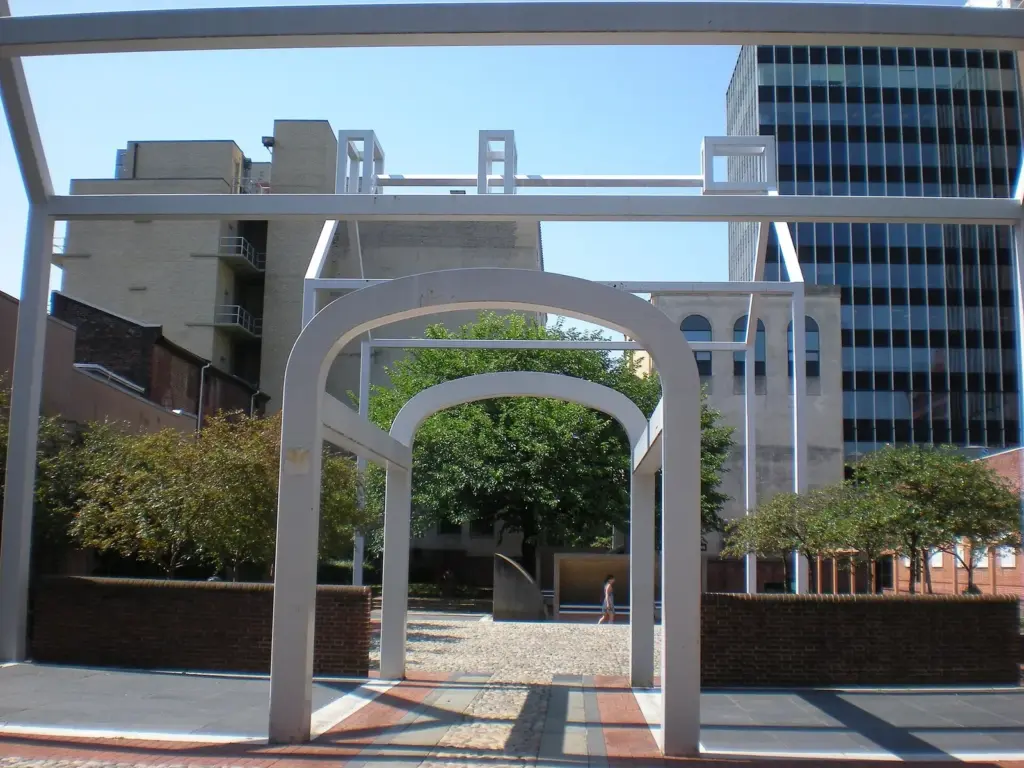
Plan it: Enter from Market Street (between 3rd and 4th) or Chestnut Street. Free; daily 9am-5pm. Allow 1 hour. Best for: families, Franklin fans.
11. Franklin Court Printing Office and Bindery
Free; Thursday-Monday 10am-5pm. In one of the Market Street houses Franklin built as rental property, rangers demonstrate an 18th-century printing press, the trade that made Franklin rich. The last demonstration starts at 4:20pm.
Plan it: Franklin Court, Market Street side. Free; Thursday-Monday 10am-5pm. Allow 20 minutes. Best for: kids, anyone who likes watching old machines work.
12. B. Free Franklin Post Office
Free to visit; Monday-Saturday, staffing permitting. Franklin was the first postmaster general, and this working branch of the US Post Office honors him with a hand-cancellation stamp reading “B. Free Franklin”, the signature he used. Mail a postcard from here; it’s the cheapest souvenir in the park.
Plan it: 316 Market Street. Monday-Saturday 9am-12:45pm and 2-5pm, staffing permitting. Allow 10 minutes. Best for: postcard senders.
13. Carpenters’ Hall
Free; Tuesday-Sunday 10am-4pm. The First Continental Congress met in this small Georgian hall in 1774, two years before independence, and the building still belongs to the Carpenters’ Company, the builders’ guild that put it up. Inside are the Windsor chairs the delegates used and exhibits on the guild. It sits at the end of a quiet brick courtyard off Chestnut Street and is one of the most photogenic buildings in the district.
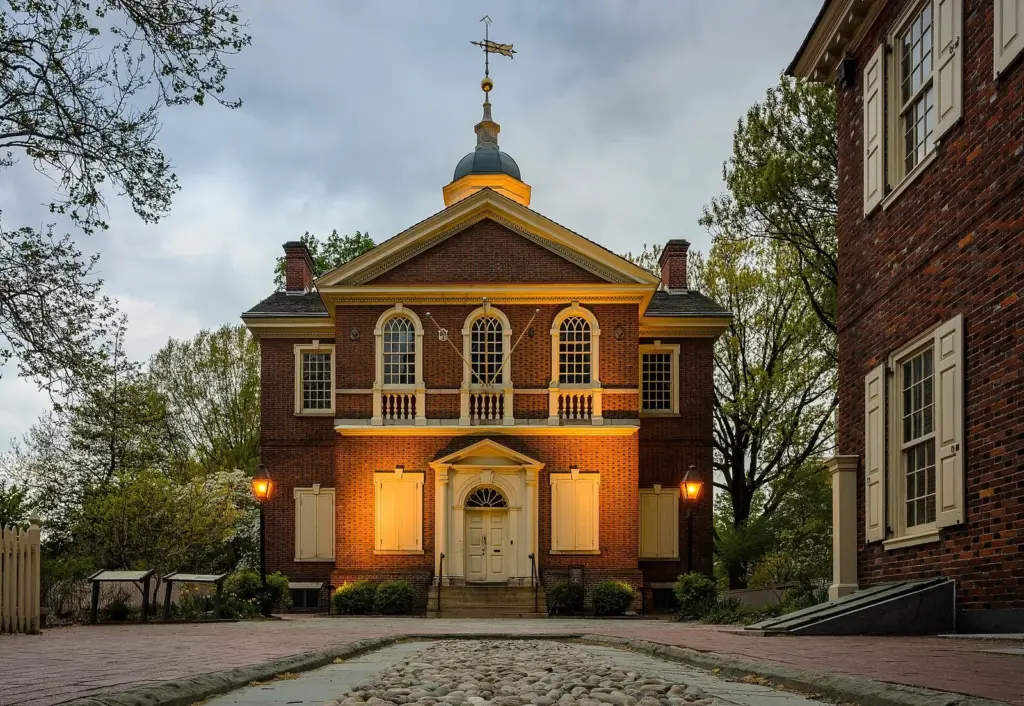
Plan it: 320 Chestnut Street. Free; Tuesday-Sunday 10am-4pm. Allow 20 minutes. Best for: history fans, photographers.
14. First Bank of the United States
Free; Thursday-Monday 11am-4pm. Alexander Hamilton’s national bank opened in this marble-fronted building in the 1790s, and for years it was exterior-only. It’s now open Thursday to Monday, with ranger talks at noon, 1, 2 and 3pm, which makes it one of the newest doors in the park to walk through.
Plan it: 116 South 3rd Street. Free; Thursday-Monday 11am-4pm, as of September 2026. Allow 30 minutes. Best for: Hamilton fans, economics nerds.
15. Second Bank of the United States Portrait Gallery
Free; Thursday-Monday noon-5pm. A Greek temple on Chestnut Street, finished in the 1820s, the Second Bank now holds a portrait gallery of the founding era, including many portraits by Charles Willson Peale. It’s the best place in the park to put faces to the names you’ve been hearing all day.
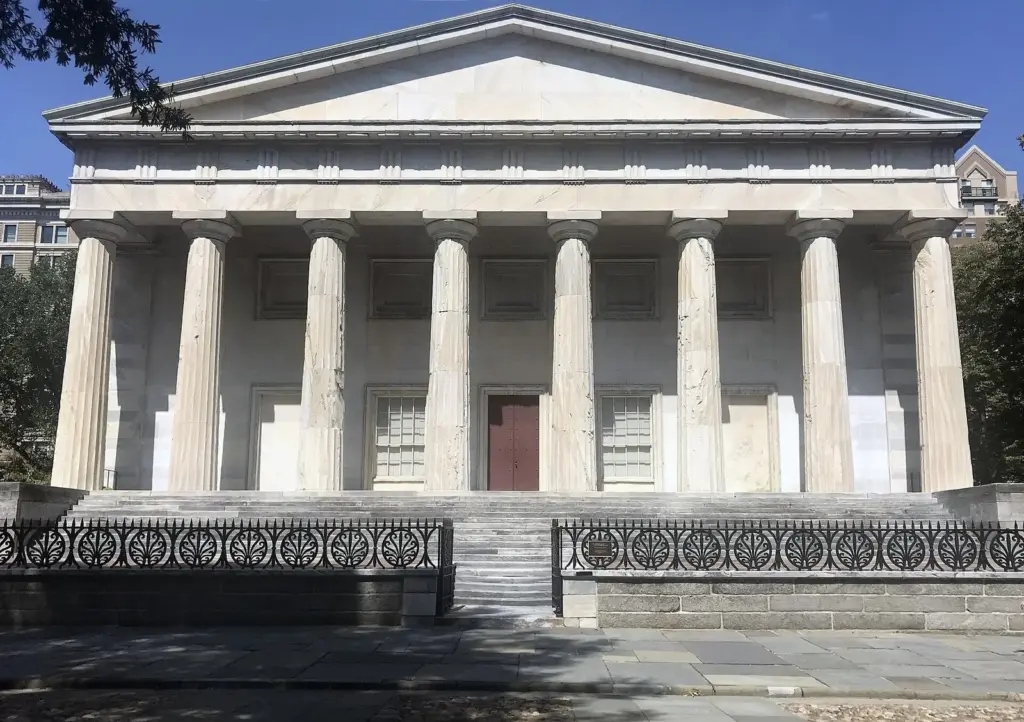
Plan it: 420 Chestnut Street. Free; Thursday-Monday noon-5pm. Allow 30 minutes. Best for: art and history lovers.
16. Museum of the American Revolution
Paid; daily 10am-5pm. If you do one paid museum in historic Philadelphia, make it this one. It tells the Revolution through objects, immersive rooms and the stories of soldiers, women, enslaved people and Native nations, and it saves its star for a short film that ends with the reveal of George Washington’s own campaign tent. Two to three hours goes quickly. It’s closed the Tuesday after Labor Day, Thanksgiving, Christmas and New Year’s Day, and the Cross Keys Cafe inside is handy for lunch.
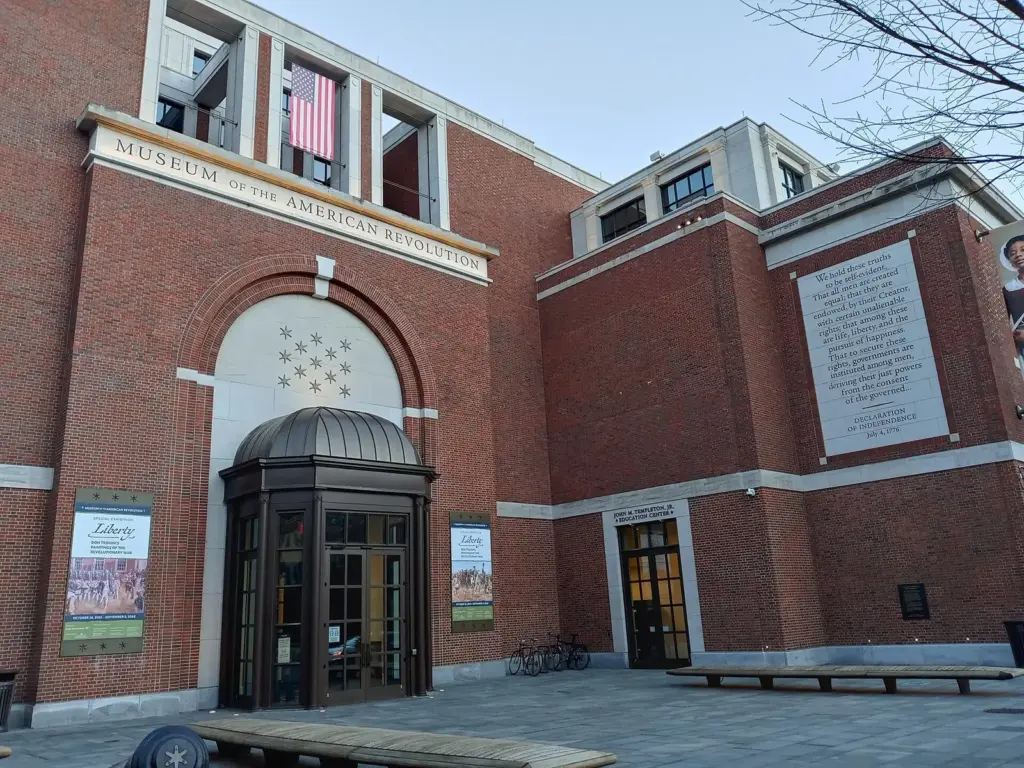
Plan it: 101 South 3rd Street (3rd and Chestnut). Paid; timed tickets through amrevmuseum.org; daily 10am-5pm. Allow 2-3 hours. Best for: everyone over about eight.
17. Merchants’ Exchange Building
Exterior; free. William Strickland’s curved Greek Revival exchange, with its round colonnade facing Dock Street, was the city’s stock exchange in the 19th century. It now holds Park Service offices, so admire it from the street on your way to City Tavern and Welcome Park.
Plan it: 3rd and Walnut streets. Exterior only. Allow 5 minutes. Best for: architecture fans.
18. City Tavern
Exterior; not a working restaurant. Delegates to the Continental Congress ate, drank and argued at City Tavern, and the building you see is a reconstruction on the original site. It’s worth a look from the street, but the Park Service lists it as a historic site, not a working restaurant, so don’t plan lunch around it.
Plan it: 138 South 2nd Street. Exterior only. Allow 5 minutes. Best for: a stop on the way to Welcome Park.
19. Welcome Park
Free; open-air. This small plaza marks the site of William Penn’s Slate Roof House, where he lived in 1699-1701, and it lays out Penn’s original street plan of Philadelphia in the paving, with a timeline of his life along the wall. It’s a two-minute stop that makes the grid you’ve been walking all day suddenly make sense.
Plan it: 2nd Street between Walnut and Chestnut. Free. Allow 10 minutes. Best for: map lovers.
20. Bishop White House and Todd House
Exterior only. Two houses on Walnut Street show how different Philadelphians lived in the 1790s: the grand townhouse of Bishop William White, chaplain to the Continental Congress, and the modest home of the lawyer John Todd and his wife Dolley, later Dolley Madison. The Park Service lists both as exterior-only, so read the signs and walk on.
Plan it: 309 and 343 Walnut Street. Exterior only. Allow 10 minutes. Best for: a walk toward Society Hill.
Old City: Christ Church, Betsy Ross and Elfreth’s Alley
North of Market Street, Old City mixes colonial landmarks with galleries, museums and restaurants. It’s the neighborhood to walk after lunch.
21. Christ Church
Open daily 11am-5pm. Washington, Franklin and Betsy Ross all worshipped in this 1744 church, whose white steeple was once the tallest structure in the colonies. The pews of the famous are marked, the interior is still a working Episcopal parish, and volunteer guides are usually on hand to point things out.
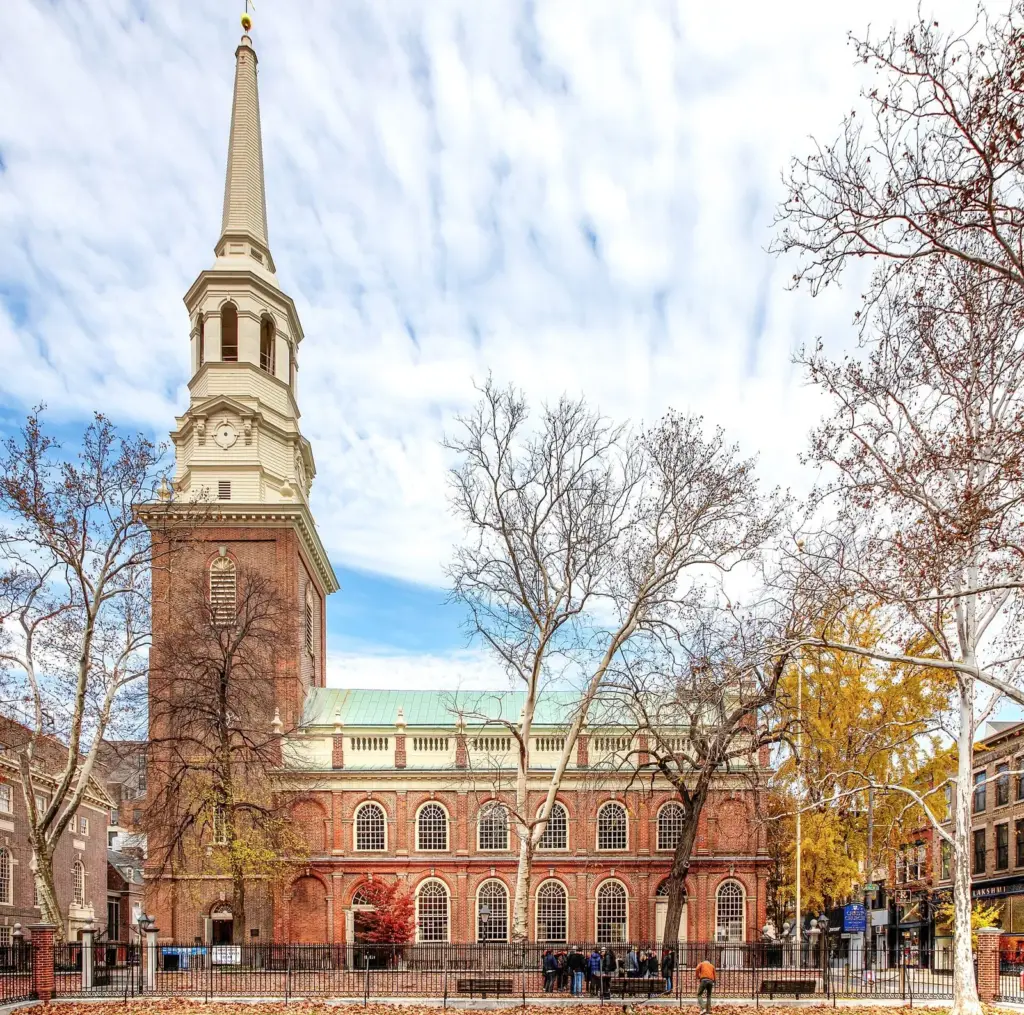
Plan it: 20 North American Street (2nd Street above Market). Open every day 11am-5pm, as of September 2026 (christchurchphila.org). Allow 30 minutes. Best for: history fans.
22. Christ Church Burial Ground
Open daily 11am-5pm. Two blocks west of the church, Benjamin Franklin and his wife Deborah lie under a plain slab near the corner of 5th and Arch, along with other founders, including four more signers of the Declaration. Visitors toss pennies onto Franklin’s grave for luck, a nod to “a penny saved is a penny earned.” You can see the grave through the fence from the sidewalk without going in.
Plan it: 5th and Arch streets. Open daily 11am-5pm; check admission at the gate. Allow 20 minutes. Best for: Franklin fans.
23. Betsy Ross House
Paid; daily tours. Whether Betsy Ross sewed the first American flag is a story historians still argue about, and the house leans into that honestly while showing how an 18th-century upholsterer lived and worked. Costumed interpreters, including “Betsy” herself, make it a good stop for kids, and Ross and her third husband are buried in the courtyard. Historic Philadelphia, Inc. runs it, along with Franklin Square and the Once Upon A Nation storytellers.
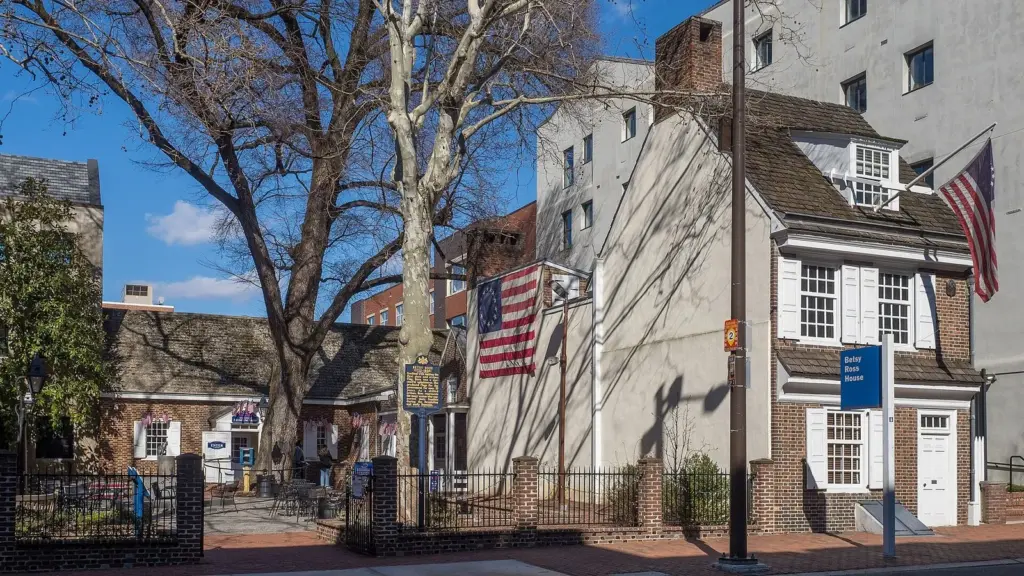
Plan it: 239 Arch Street. Paid admission and daily tours through Historic Philadelphia. Allow 45 minutes. Best for: families.
24. Elfreth’s Alley
Free to walk; museum $3. A narrow cobbled lane of 18th-century rowhouses, Elfreth’s Alley is billed as the oldest continuously inhabited residential street in the country, and people still live in its houses. That’s the one rule: it’s a street, not a set, so keep voices down, stay off the steps and don’t peer into windows. The museum house is open Fridays to Sundays, noon to 4pm, for $3 (kids 7-12, $2).
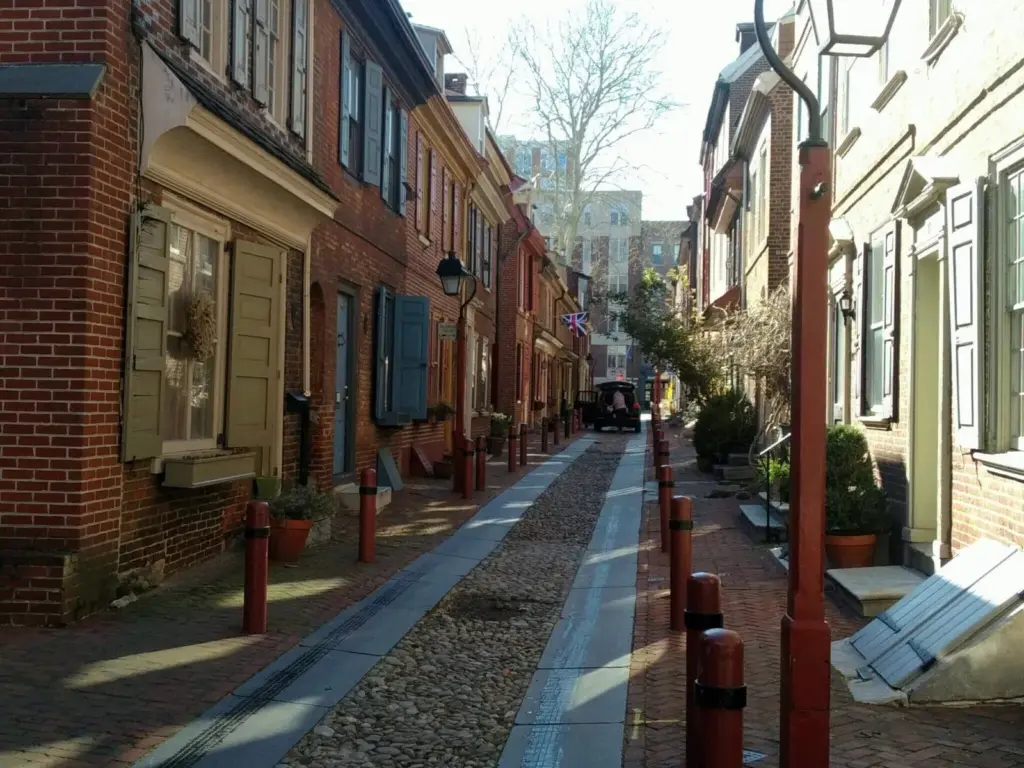
Plan it: Off 2nd Street between Arch and Race. Free to walk; museum Friday-Sunday noon-4pm, as of the 2026 season (elfrethsalley.org). Allow 20-40 minutes. Best for: photographers, early risers.
25. Arch Street Meeting House
Check visiting hours. Built in 1804 on land William Penn granted to the Quakers, this is one of the largest Quaker meeting houses in the world, and still an active one. It tells the story of the Religious Society of Friends in the city Penn founded as a “holy experiment” in religious tolerance.
Plan it: 320 Arch Street. Check visiting hours before you go. Allow 30 minutes. Best for: anyone curious about Penn’s Philadelphia.
26. Free Quaker Meeting House
Free; seasonal. Quakers were pacifists, and those who took up arms in the Revolution were thrown out of their meetings; these “Fighting Quakers” built their own meeting house here in 1783. The Park Service opens it seasonally, so check the NPS site for its dates before you go.
Plan it: 5th and Arch streets, facing the burial ground. Closed for the season as of September 2026. Allow 15 minutes when open. Best for: a stop on Arch Street.
27. Weitzman National Museum of American Jewish History
Free general admission; Wednesday-Sunday. On Independence Mall, steps from the Liberty Bell, the Weitzman tells more than 360 years of Jewish life in America across several floors. General admission is free; its special exhibition, The First Salute, costs $18 and up.
Plan it: 101 South Independence Mall East (5th and Market). Open Wednesday-Sunday, as of September 2026 (theweitzman.org). Allow 1-2 hours. Best for: history and culture lovers.
28. Science History Institute
Free; Wednesday-Saturday 10am-5pm. A small, free museum of chemistry and materials that’s much more fun than that sounds: old lab equipment, alchemy paintings and the odd science behind everyday stuff. It’s a good cool-down stop between the big sites.
Plan it: 315 Chestnut Street. Free; Wednesday-Saturday 10am-5pm (sciencehistory.org). Allow 45 minutes. Best for: curious kids and adults.
29. National Liberty Museum
$12 adults. A museum about liberty itself, told through the stories of heroes from around the world and a large collection of contemporary glass art. Admission is $12 for adults, $10 for seniors, $8 for students and $6 for ages 6-17. Its website shows two different sets of hours, so check before you go.
Plan it: 321 Chestnut Street. Paid admission (libertymuseum.org, prices as of September 2026). Allow 1 hour. Best for: families, glass-art fans.
30. Declaration House
Exterior only. At 7th and Market, a reconstruction marks the house where Thomas Jefferson rented rooms and drafted the Declaration of Independence in June 1776. The Park Service lists it as exterior-only for now, so it’s a quick look on your way west.
Plan it: 7th and Market streets. Exterior only. Allow 5 minutes. Best for: completing the Declaration story.
31. Franklin Square
Free to enter; rides extra. One of the five squares in William Penn’s original plan, Franklin Square is now a family park with a carousel, a Philadelphia-themed mini golf course and a fountain, run by Historic Philadelphia, Inc. After a morning of history, it’s where kids get their reward.
Plan it: 6th and Race streets. Free to enter; carousel and mini golf charge, and are seasonal. Allow 1 hour. Best for: families with young kids.
32. United States Mint
Tours suspended. The Philadelphia Mint’s free, self-guided gallery tour over the coin-production floor was one of the city’s best free attractions, but the Mint suspended public tours and gift-shop access on March 9, 2026 while it renovates the building’s front entrance, and no reopening date has been announced. Call the tour line at 215-408-0112 before you walk over.
Plan it: 151 North Independence Mall East (5th and Arch). Tours suspended as of September 2026; when open, adults need photo ID. Best for: checking back later.
33. African American Museum in Philadelphia
Temporarily closed. Founded for the Bicentennial in 1976, AAMP tells the story of African Americans in Philadelphia and beyond, and it’s an essential companion to the President’s House and Mother Bethel. It closed to the public on September 7, 2026 to change over its exhibitions, and no reopening date was posted in late September, so check before you go.
Plan it: 701 Arch Street. Temporarily closed as of September 2026 (aampmuseum.org). Allow 1-2 hours when open. Best for: everyone.
Society Hill and South: Squares, Churches and Black History
South of Walnut Street, Society Hill has the largest collection of original 18th-century houses in the country and a quieter feel than Old City. Wander it slowly.
34. Washington Square
Free; open-air. Another of Penn’s original squares, Washington Square was a burial ground for soldiers during the Revolution. The Tomb of the Unknown Revolutionary War Soldier stands at its west side, with an eternal flame and a statue of Washington, and the square itself is a shady place to sit between sites.
Plan it: 6th and Walnut streets. Free, open daily. Allow 15 minutes. Best for: a quiet break.
35. Thaddeus Kosciuszko National Memorial
Free; Saturday and Sunday noon-4pm. The Polish engineer who fortified West Point and Saratoga for the Continental Army lived in this small boarding house in 1797 and 1798, and it’s now one of the smallest sites in the National Park System. Two rooms tell his story, including his bequest to buy freedom for enslaved people.
Plan it: 3rd and Pine streets. Free; Saturday and Sunday noon-4pm, as of September 2026. Allow 20 minutes. Best for: weekend visitors, Polish-American history.
36. Mother Bethel AME Church
Check museum hours. Richard Allen, a formerly enslaved man who bought his own freedom, founded Mother Bethel in 1794 and, from it, the African Methodist Episcopal Church, now a worldwide denomination. The congregation has worshipped on this site ever since, making it among the oldest pieces of land continuously owned by Black Americans in the country. Allen is entombed in the church’s lower-level museum. The present church dates from the late 1800s.
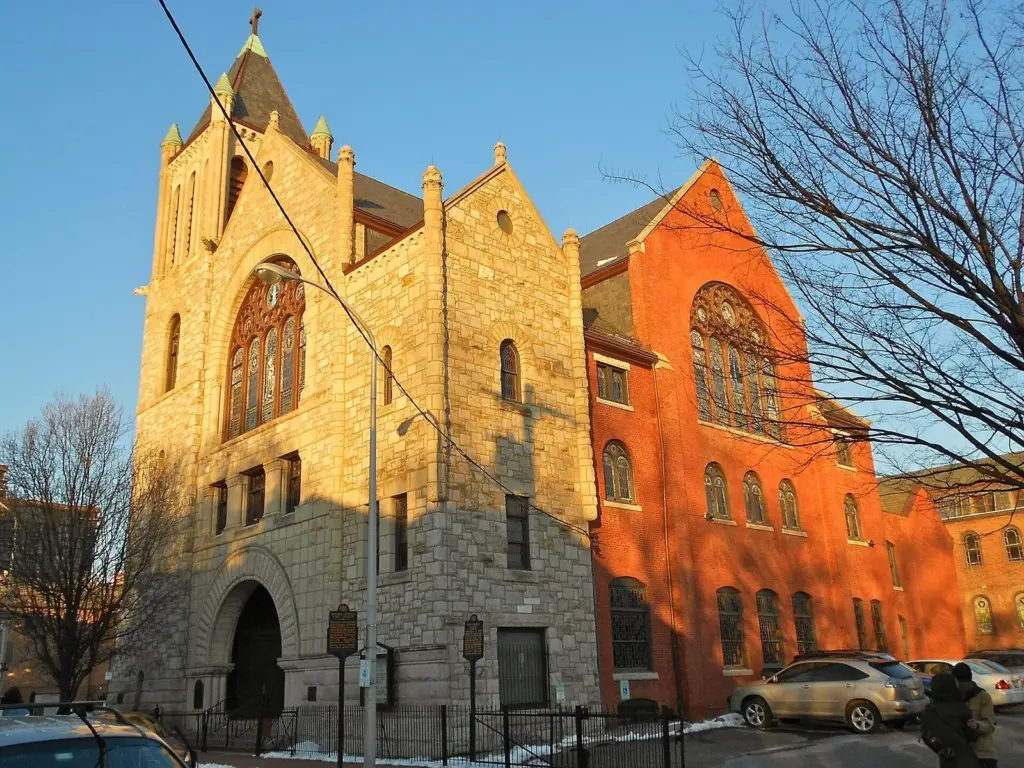
Plan it: 419 South 6th Street. An active church; check museum hours and tour arrangements through motherbethel.org. Allow 45 minutes. Best for: Black history, church history.
37. Old St. Joseph’s Church
Free; an active parish. Hidden down Willings Alley, Old St. Joseph’s was founded in 1733 as the city’s first Catholic parish, at a time when public Catholic worship was banned in most of the British colonies. Penn’s charter of religious tolerance made it possible, which is the whole point of the place.
Plan it: 321 Willings Alley, off 4th Street. Free; respect services. Allow 15 minutes. Best for: a quiet stop.
38. St. Peter’s Church
Free; an active parish. This Georgian Episcopal church from the 1760s, with its tall wooden steeple and walled churchyard, is a Society Hill landmark; its graveyard holds figures from the Revolution and the early republic, including the painter Charles Willson Peale. It’s a peaceful walk-through on the way to Head House Square.
Plan it: 3rd and Pine streets. Free; churchyard open to respectful visitors. Allow 15 minutes. Best for: history walkers.
39. Head House Square
Free; open-air. The brick Head House of 1804 and the older open-sided market shed behind it, the Shambles, still stand in the middle of 2nd Street, and the shed hosts a farmers market in season. The surrounding blocks are full of restaurants and bars, which makes it the natural end to a Society Hill walk.
Plan it: 2nd and Pine to Lombard streets. Free. Allow 20 minutes, longer for dinner. Best for: food lovers, a late-afternoon stop.
40. Gloria Dei (Old Swedes’) Church
Free grounds; daily 5am-11pm. A short walk south in Queen Village, Gloria Dei was built around 1700 by Swedish settlers who were here before Penn, and it’s the oldest church in Pennsylvania. It’s a National Historic Site with a quiet churchyard; the grounds are open daily, and the church sets its own hours and services.
Plan it: Columbus Boulevard and Christian Street, Queen Village. Grounds open daily 5am-11pm; check church hours on Gloria Dei’s own site. Allow 20 minutes. Best for: completing the colonial story.
Black History in Historic Philadelphia
The founding story told on Independence Mall has a second strand that the city’s sites now tell directly, and it’s worth planning part of a day around it. Start at the President’s House Site, where the memorial names the nine people George Washington enslaved in the executive mansion and tells how Ona Judge escaped from it in 1796. Walk south to Mother Bethel AME Church on 6th Street, where Richard Allen founded the African Methodist Episcopal Church in 1794 after he and other Black worshippers walked out of a segregated white congregation; Allen is entombed in the museum downstairs. Allen and Absalom Jones had already founded the Free African Society in 1787, the same year the Constitution was written a few blocks away.
Back on Arch Street, the African American Museum in Philadelphia, founded for the Bicentennial in 1976, is the city’s main museum of Black history, though it’s temporarily closed for an exhibition changeover this fall. Ask at the Visitor Center which ranger talks are running that day; the President’s House story is one the rangers tell well. Outside Old City, the city’s broader Black history, from the Octavius Catto memorial at City Hall to Underground Railroad sites in Germantown, belongs to a longer trip.
Accessibility and Visiting With Kids
Getting around: the Park Service buildings are mostly accessible, with a ramp to the Independence Square security entrance on 5th Street, but the 4:20pm expanded tour of Independence Hall is not wheelchair accessible. The Liberty Bell Center, the Visitor Center and the big museums are modern and step-free. The colonial houses, churches and courtyards are harder: expect steps, narrow doors, brick sidewalks and cobblestones on Elfreth’s Alley and in Franklin Court. Ask each site about access before you go.
With children: the Benjamin Franklin Museum’s hands-on galleries, the printing demonstrations in Franklin Court and the costumed interpreters at the Betsy Ross House hold kids’ attention best, and Franklin Square’s carousel and mini golf make a good reward. At the National Constitution Center, kids love posing with the bronze delegates in Signers’ Hall. Keep Independence Hall to the short standard tour with younger children, and save the Museum of the American Revolution for kids of about eight and up.
A One-Day Historic Philadelphia Walking Plan
This route covers the essentials in one long day, about three miles on foot, with the ticket and opening-hour pinch points in the right order. It assumes a Thursday to Sunday, when every site in it is open.
| Time | Stop | Why then |
|---|---|---|
| 8:45am | Independence Square security entrance on 5th Street | Beat the line for the 9am no-ticket open house |
| 9:00am | Independence Hall, Congress Hall, West Wing | No ticket needed before 10:30 |
| 10:15am | President’s House Site, then the Liberty Bell | The bell line is shorter in the morning |
| 11:15am | Benjamin Franklin Museum and Franklin Court | Printing demonstrations from 10am, Thursday to Monday |
| 12:30pm | Lunch in Old City | Plenty of choice around 2nd and 3rd streets |
| 1:30pm | Museum of the American Revolution | Give it two hours |
| 3:45pm | Carpenters’ Hall, then the Second Bank portrait gallery | Both open into the afternoon |
| 4:30pm | Christ Church Burial Ground and Christ Church | Both close at 5pm |
| 5:15pm | Elfreth’s Alley | Quiet and golden in the early evening |
With a second day, add the National Constitution Center (Wednesday to Sunday), the Betsy Ross House, a Society Hill walk from Washington Square past Mother Bethel and St. Peter’s to Head House Square, and the quieter park buildings like the First Bank and Philosophical Hall.
Historic Philadelphia doesn’t end at Old City. City Hall, the Benjamin Franklin Parkway museums and Eastern State Penitentiary are covered in our guide to things to do in Philadelphia, along with where to eat and stay.
What’s Changed, and What to Skip
- Independence Hall’s ticketed tours now start at 10:40am, after the 9 to 10:30am no-ticket open house. Book on Recreation.gov if you can’t be there early.
- The First Bank of the United States is open, Thursday to Monday, after years as an exterior-only site.
- The West Wing exhibit is now Legacies of Independence, not Great Essentials.
- Philadelphia Mint tours are suspended for entrance renovations, since March 9, 2026. Don’t count on them without calling.
- The African American Museum in Philadelphia is temporarily closed for an exhibition changeover that began September 7.
- City Tavern isn’t a restaurant any more. The Park Service lists it as a historic site only.
- The Edgar Allan Poe National Historic Site is closed for a utility project, with no reopening date posted.
- You don’t need a paid tour to understand the park. The rangers’ free walking tour leaves the Liberty Bell Center’s viewing window daily at 10am, and the building rangers are generous with their time.
Independence National Historical Park: Your Questions
Do you need tickets for Independence Hall?
For guided tours, yes: free timed tickets from Recreation.gov, with a $1 fee per ticket. From 9 to 10:30am there’s a no-ticket open house. Tours then run every 20 minutes from 10:40am to 4pm, plus a 4:20pm expanded tour, all through the security entrance on 5th Street.
Is the Liberty Bell free?
Yes. The Liberty Bell Center is free with no ticket, open daily from 9am to 5pm, with security screening at the entrance. Go first thing in the morning or late afternoon for the shortest line, or see the bell through the glass from Chestnut Street at any hour.
How long do you need at Independence National Historical Park?
Half a day covers Independence Hall, the Liberty Bell, Congress Hall and the President’s House. A full day adds the Benjamin Franklin Museum, the Museum of the American Revolution and Old City’s churches and Elfreth’s Alley. Two days lets you add the Constitution Center and Society Hill.
Is Independence National Historical Park free?
The Park Service sites are free, including the Liberty Bell, Congress Hall, the Benjamin Franklin Museum, Carpenters’ Hall and the two banks. Independence Hall tickets are free apart from a $1 booking fee. The Museum of the American Revolution, the Constitution Center and the Betsy Ross House charge admission.
Where do you park for Independence Hall?
The Independence Visitor Center has an underground garage at 6th and Market, and there are other garages nearby at city prices. Many visitors take SEPTA instead: the L line stops at 5th Street/Independence Hall, and Center City is a 15- to 25-minute walk away.
What is the best time to visit Independence Hall?
Early. Be at the 5th Street security entrance before 9am for the no-ticket open house, which runs until 10:30. Weekdays in late fall and winter are the quietest; summer weekends, school-trip season in May and the week of July 4 are the busiest, so book timed tickets ahead then.
What is Independence Hall known for?
It’s where the Second Continental Congress adopted the Declaration of Independence on July 4, 1776, and where the Constitutional Convention drafted the US Constitution in 1787. Built as the Pennsylvania State House, it’s now a World Heritage Site and the centerpiece of the national park.
What are the best historic sites in Philadelphia besides the Liberty Bell?
Congress Hall, the Benjamin Franklin Museum, the Museum of the American Revolution, Carpenters’ Hall, Christ Church and its burial ground, the President’s House Site, Elfreth’s Alley and Mother Bethel AME Church. Together they tell the story of the founding, and of who was left out of it.
Related Pennsylvania Guides
- Things to Do in Philadelphia: City Hall, the Parkway museums, neighborhoods, food and where to stay.
Sources and How We Checked
Everything on this page was checked on September 24, 2026 against the official sources below and compiled from them; we don’t claim first-hand visits. Drive times are free-flow estimates from OpenStreetMap-based routing (the Valhalla engine), rounded to the nearest 15 minutes.
- National Park Service, Independence NHP operating hours and seasons (updated September 20, 2026): every park building’s hours, the Independence Hall schedule and the exterior-only sites.
- NPS, Independence Hall: timed tickets and the Recreation.gov fee.
- National Constitution Center: hours and what admission includes.
- Museum of the American Revolution: hours and closures.
- Elfreth’s Alley Association: museum hours and admission.
- African American Museum in Philadelphia: the temporary closure.
Also used: the websites of Christ Church, the Weitzman National Museum of American Jewish History, the Science History Institute, the National Liberty Museum, Historic Philadelphia, Inc. and Mother Bethel AME Church, and the US Mint’s tour notices.
Pennsylvania Tourism Guide is an independent publication. We are not affiliated with the National Park Service, the National Constitution Center, the Museum of the American Revolution, Historic Philadelphia, Inc., the US Mint or any museum, church or site named here, and no one paid to be included.
Photo Credits
- Independence Hall, Philadelphia: photo by Mys 721tx, via Wikimedia Commons (CC BY-SA 3.0)
- The Liberty Bell: photo by Mys 721tx, via Wikimedia Commons (CC BY-SA 3.0)
- Franklin Court ghost structure: photo by Missvain, via Wikimedia Commons (CC0)
- Carpenters' Hall: photo by Pbjamesphoto, via Wikimedia Commons (CC BY-SA 4.0)
- Second Bank of the United States: photo by Myotus, via Wikimedia Commons (CC BY-SA 4.0)
- Museum of the American Revolution: photo by Kreuz und quer, via Wikimedia Commons (CC0)
- Christ Church, Philadelphia: photo by Al R, via Wikimedia Commons (CC BY-SA 2.0)
- Betsy Ross House: photo by ajay_suresh, via Wikimedia Commons (CC BY 2.0)
- Elfreth's Alley: photo by Rhonda McCloughan (Pr41799), via Wikimedia Commons (CC BY-SA 4.0)
- Mother Bethel AME Church: photo by Smallbones, via Wikimedia Commons (CC0)