Pennsylvania doesn’t charge you a cent to walk into any of its 125 state parks. There’s no entrance fee and no parking fee from the state, so climbing past 21 waterfalls at Ricketts Glen, crossing a field of boulders left by the last ice age at Hickory Run, or lying on the grass at Cherry Springs under one of the darkest skies in the East costs nothing but gas. That makes Pennsylvania state parks the best travel deal in the state, and with more than 300,000 acres to choose from, the hard part is picking. This guide ranks the 30 best by what they do best, with drive times from Philadelphia, Pittsburgh and Harrisburg and the rules you need for camping, cabins and pets.
Quick answer: For waterfalls, go to Ricketts Glen; for a short drive from Philadelphia, French Creek or Hickory Run; from Pittsburgh, Moraine, McConnells Mill or Ohiopyle. Promised Land is the classic Poconos lake park, Worlds End and Cook Forest are the best forest weekends, Presque Isle has the beaches and Cherry Springs the stars. Day use is free everywhere; reserve cabins and campsites up to 11 months ahead, with a $6.50 transaction fee.
Last updated October 1, 2026. Park sizes, rules, fees and closures were checked that day against the Pennsylvania Department of Conservation and Natural Resources (DCNR) park pages, with earlier details verified in late September 2026.
- 125 parks, no entrance fee: DCNR’s Bureau of State Parks runs 125 parks covering more than 300,000 acres. You pay only for camping, cabins and rentals.
- Booking: reservations open up to 11 months ahead online or at 888-PA-PARKS (888-727-2757, Monday to Saturday, 7am to 5pm), with a $6.50 non-refundable transaction fee and a $10 fee for changes.
- Still closed: the Glen Onoko Falls trail in Lehigh Gorge State Park, shut since 2019 while DCNR rebuilds it, with no reopening date.
- Closing soon: the Kinzua Bridge Skywalk is open only through October 31, 2026, then closes for repairs until fall 2027. Archbald Pothole State Park closes for the season on the third Saturday of November.
- Pets are welcome in designated areas, campsites, cabins and yurts, on a leash and attended at all times.
On this page: At a glance | Fees, booking and rules | Waterfalls and gorges | Views and dark skies | Lakes and beaches | Forests, history and wildlife | City parks | Camping and cabins | By activity | By season | FAQ
The 30 best Pennsylvania state parks at a glance
Drive times are free-flow estimates from Philadelphia City Hall, downtown Pittsburgh and Harrisburg, rounded to 15 minutes.
| Park | Best for | Philadelphia | Pittsburgh | Harrisburg |
|---|---|---|---|---|
| 1. Ricketts Glen | Waterfall hiking | 3 hr | 4 hr 45 | 2 hr 30 |
| 2. Ohiopyle | Rafting, biking, waterfalls | 4 hr 45 | 1 hr 30 | 3 hr 15 |
| 3. McConnells Mill | Gorge hiking | 5 hr 30 | 45 min | 4 hr |
| 4. Hickory Run | Boulder Field, falls | 1 hr 45 | 4 hr 45 | 1 hr 45 |
| 5. Worlds End | Forest valley, vistas | 3 hr 30 | 4 hr 30 | 2 hr 30 |
| 6. Trough Creek | Gorge trails | 3 hr 45 | 2 hr 45 | 2 hr |
| 7. Cherry Springs | Stargazing | 5 hr | 4 hr 15 | 3 hr 30 |
| 8. Leonard Harrison | Grand Canyon views | 4 hr 30 | 4 hr 45 | 3 hr |
| 9. Colton Point | Quieter canyon rim | 4 hr 45 | 5 hr | 3 hr 15 |
| 10. Kinzua Bridge | Skywalk (to Oct 31) | 5 hr 30 | 3 hr 15 | 3 hr 45 |
| 11. Hyner View | River vista, hang gliding | 4 hr 15 | 4 hr | 2 hr 45 |
| 12. Big Pocono | Three-state views | 2 hr | 5 hr | 2 hr 15 |
| 13. Susquehannock | Susquehanna overlooks | 1 hr 45 | 4 hr 30 | 1 hr 30 |
| 14. Presque Isle | Beaches | 6 hr 45 | 2 hr | 5 hr |
| 15. Pymatuning | Biggest lake | 6 hr 30 | 2 hr | 4 hr 45 |
| 16. Moraine | Sailing, Pittsburgh lake days | 5 hr 45 | 1 hr | 4 hr 15 |
| 17. Promised Land | Poconos lakes | 2 hr 30 | 5 hr 15 | 2 hr 30 |
| 18. Black Moshannon | Bog and boardwalks | 3 hr 45 | 2 hr 45 | 2 hr |
| 19. Gifford Pinchot | Central PA lake | 2 hr | 3 hr 30 | 30 min |
| 20. Nockamixon | Philadelphia-area lake | 1 hr 15 | 5 hr | 1 hr 45 |
| 21. Cook Forest | Old-growth forest | 5 hr | 2 hr | 3 hr 15 |
| 22. French Creek | Big forest near Philadelphia | 1 hr | 4 hr 30 | 1 hr 15 |
| 23. Pine Grove Furnace | Appalachian Trail | 2 hr 30 | 3 hr 15 | 50 min |
| 24. Raccoon Creek | Wildflowers | 5 hr 30 | 40 min | 4 hr |
| 25. Parker Dam | CCC history, wilderness | 4 hr 30 | 2 hr 30 | 2 hr 45 |
| 26. Sinnemahoning | PA Wilds wildlife | 4 hr 45 | 3 hr 30 | 3 hr |
| 27. Laurel Caverns | Caving | 5 hr | 1 hr 30 | 3 hr 30 |
| 28. Archbald Pothole | Ice age geology | 2 hr 15 | 5 hr | 2 hr 15 |
| 29. Ridley Creek | Close to Philadelphia | 35 min | 4 hr 45 | 1 hr 45 |
| 30. Point State Park | Downtown Pittsburgh | 5 hr | 5 min | 3 hr 30 |
How Pennsylvania state parks work: fees, booking and rules
Entry is free. DCNR charges no entrance or parking fee at any state park. That covers trails, picnic areas, overlooks, beaches and most programs. A few borough- or town-run lots next to parks, such as in Ohiopyle, do charge, so read the sign before you park.
You pay to stay. Overnight options include campsites, cabins, camping cottages and yurts, plus group camps and lodges at some parks. Reservations open up to 11 months ahead, online or by phone at 888-PA-PARKS (888-727-2757), Monday to Saturday from 7am to 5pm. DCNR adds a $6.50 non-refundable transaction fee to every reservation, and a $10 fee for changes other than adding nights. Popular parks book out for summer and October weekends months in advance, so set a reminder for the day your dates open.
Pets. Dogs and other pets are welcome in designated day-use areas, designated campsites, designated cabins, camping cottages and yurts, and anywhere not closed to them. They must be on a leash, caged or crated, and attended at all times; electronic fences and shock collars don’t count as control. Beaches, swimming areas and some buildings are usually off-limits to pets, so check each park.
Other rules worth knowing. Drones may fly only at six designated sites in certain parks. Metal detectors are allowed in many parks. Many parks are open to hunting in season, so wear blaze orange on trails in late fall. Parks are generally open from sunrise to sunset for day use, and some roads close in winter. For trail-by-trail advice, waterfall rankings and lake details, our separate hiking, waterfall and lake guides go deeper.
Waterfalls and gorges
1. Ricketts Glen State Park
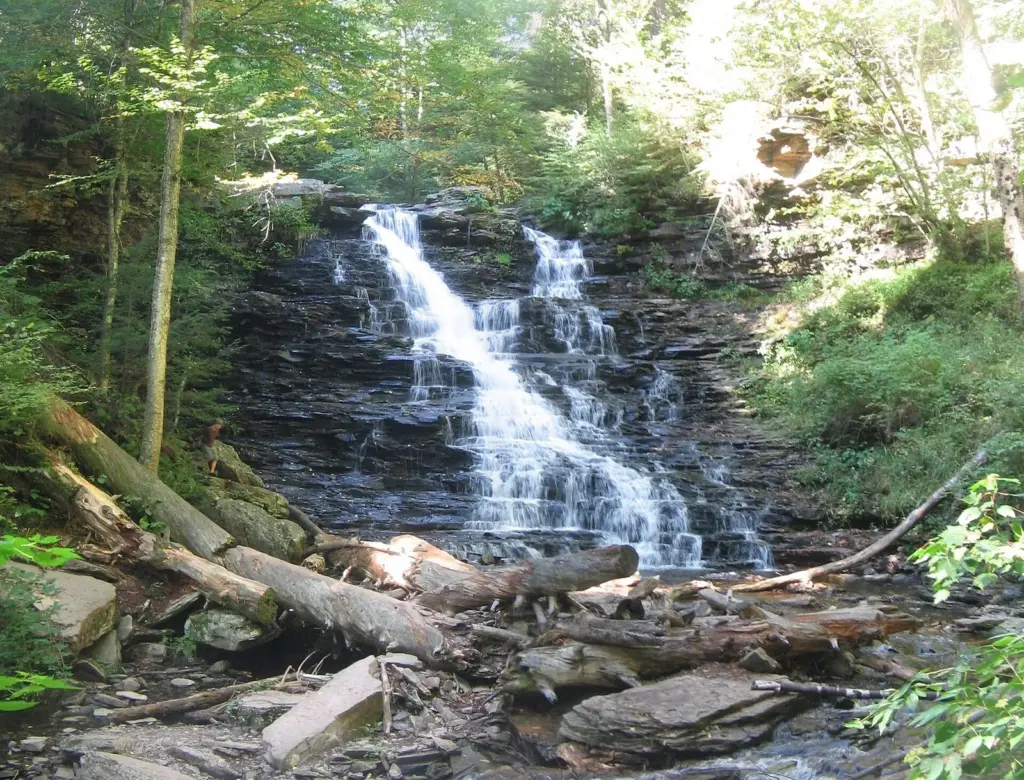
Free; spring to fall; the best hike in Pennsylvania. At 13,193 acres, Ricketts Glen is big, but everyone comes for one thing: the Falls Trail, which passes 21 named waterfalls from 11 to 94 feet high in the Glens Natural Area, a National Natural Landmark. Ganoga Falls is the tallest. The full loop is 7.2 miles; a 3.2-mile loop using the Highland Trail still passes most of the falls. The trail is rocky, steep and slippery, and it closes in winter except to properly equipped ice climbers and hikers. Lake Jean, at the top, has a beach, boating and the park’s campground.
Plan it: 695 State Route 487, Benton, about 30 miles north of Bloomsburg; about 2 hours 30 minutes from Harrisburg, 3 hours from Philadelphia and 4 hours 45 minutes from Pittsburgh. Open sunrise to sunset. PA 487 from Red Rock up to the lake is very steep. Arrive early on fall weekends. Allow 3 to 5 hours. Best for: fit hikers and photographers.
2. Ohiopyle State Park
Free (some borough lots charge); spring to fall; the adventure park. Ohiopyle wraps around the Youghiogheny River Gorge in the Laurel Highlands. DCNR’s own highlights: the deepest gorge in Pennsylvania from Baughman Rocks, Cucumber Run’s waterfall, the Ferncliff Peninsula and Ohiopyle Falls right beside the borough. Whitewater outfitters run river trips, and the Great Allegheny Passage bike trail runs through town.
Plan it: Ohiopyle, Fayette County, about 1 hour 30 minutes from Pittsburgh, 3 hours 15 minutes from Harrisburg and 4 hours 45 minutes from Philadelphia. Fallingwater is about 15 minutes away. Best for: active families and paddlers.
3. McConnells Mill State Park
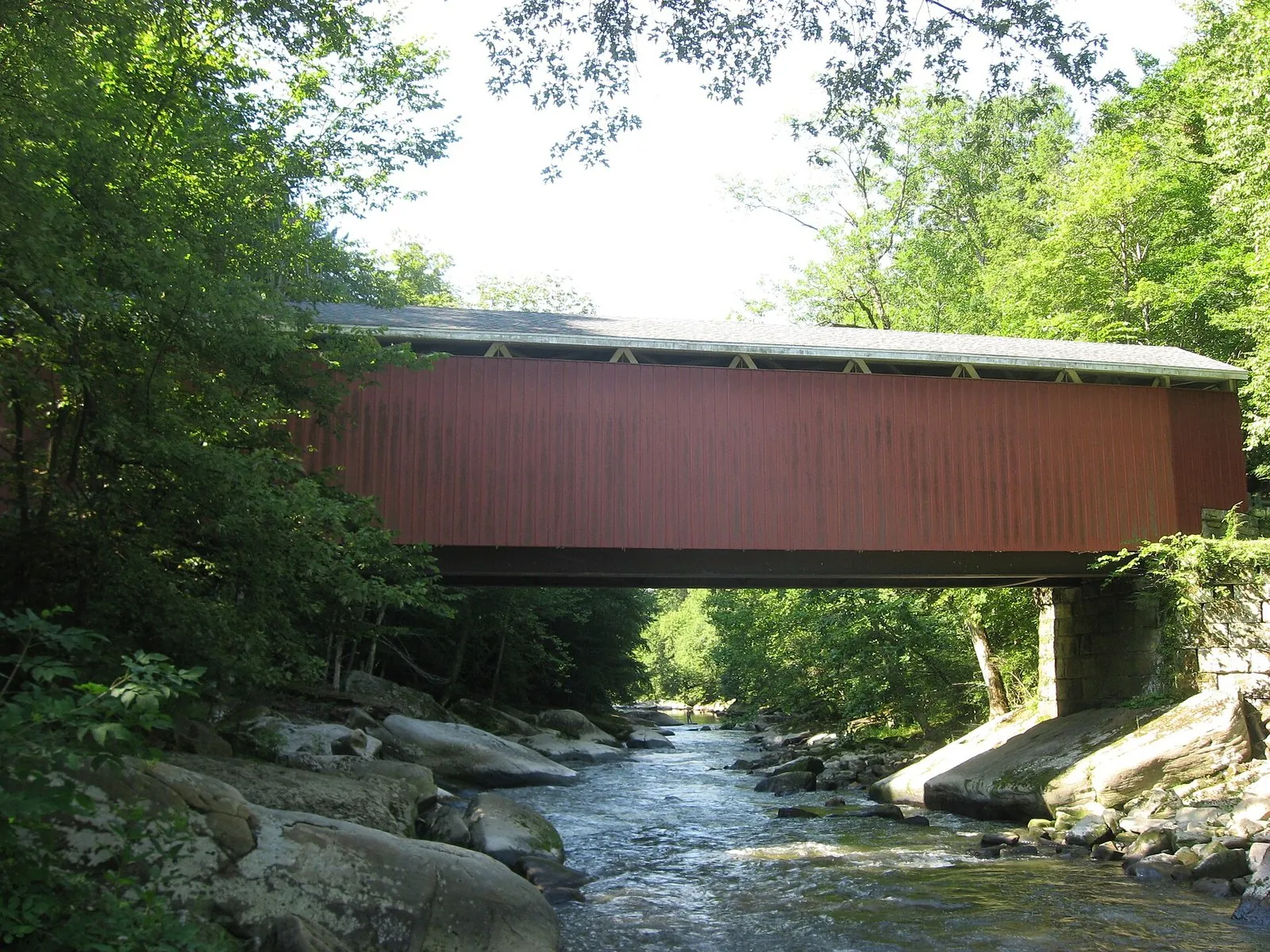
Free; spring to fall; Pittsburgh’s favorite gorge. McConnells Mill protects 2,546 acres of the Slippery Rock Creek Gorge, a National Natural Landmark carved when glacial lakes drained thousands of years ago. The valley floor is littered with huge boulders, side streams drop over waterfalls, and a restored gristmill and an 1874 covered bridge sit at the heart of it. The creek is dangerous for swimming and wading, with strong currents among the rocks; enjoy it from the trails.
Plan it: Lawrence County, about 45 minutes north of Pittsburgh, 4 hours from Harrisburg and 5 hours 30 minutes from Philadelphia. Parking near the mill is limited on weekends. Pair with Moraine, next door. Allow 2 to 3 hours. Best for: hikers and photographers from western Pennsylvania.
4. Hickory Run State Park
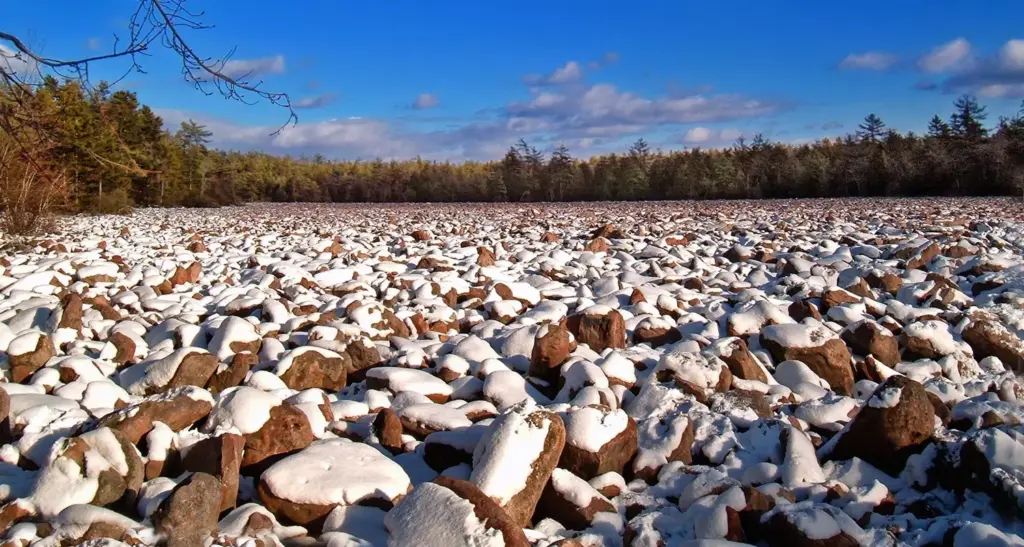
Free; spring to fall; the strangest landscape in the state. Hickory Run covers 15,990 acres of the Poconos, and its Boulder Field, a National Natural Landmark, is an almost flat field of boulders, with no soil and no trees, left by the freeze and thaw of the last ice age. Walk out onto it carefully, since the rocks are uneven and some wobble, then hike to Hawk Falls. DCNR warns that trailhead parking can fill early, even on weekdays.
Plan it: Carbon County, off I-80 and the Northeast Extension, about 1 hour 45 minutes from Philadelphia and Harrisburg, and 4 hours 45 minutes from Pittsburgh. Open sunrise to sunset. Jim Thorpe is about 30 minutes away. Allow 2 to 3 hours. Best for: families and geology fans.
5. Worlds End State Park
Free; best in October. Worlds End’s 780 acres sit in an S-shaped valley of Loyalsock Creek just south of Forksville in Sullivan County, surrounded by Loyalsock State Forest. Drive up to the accessible Loyalsock Canyon Vista or nearby High Knob Vista for views over the Endless Mountains, then swim in the creek in summer or hike sections of the Loyalsock Trail. DCNR singles out the October foliage.
Plan it: 82 Cabin Bridge Road, Forksville, about 2 hours 30 minutes from Harrisburg, 3 hours 30 minutes from Philadelphia and 4 hours 30 minutes from Pittsburgh. Roads into the valley are steep and winding. Eagles Mere is 20 minutes away. Best for: hikers and fall-color seekers.
6. Trough Creek State Park
Free; spring to fall; a small gorge with big rewards. Here Great Trough Creek cuts through Terrace Mountain on its way to Raystown Lake, and short, rugged trails lead to Balanced Rock, a boulder perched on a cliff edge, and Rainbow Falls. It’s quiet, compact and easy to combine with a Raystown Lake weekend.
Plan it: Huntingdon County, about 2 hours from Harrisburg, 2 hours 45 minutes from Pittsburgh and 3 hours 45 minutes from Philadelphia. Open sunrise to sunset. Allow 2 hours. Best for: families with older kids.
Views and dark skies
7. Cherry Springs State Park
Free; late spring to fall; the darkest sky in the East. Cherry Springs is famous for stargazing. Its Night Sky Public Viewing Area is for short visits, with a 360-degree view, shielded lighting and red light only; white lights must go off during programs, and pets aren’t allowed on the Astronomy Observation Field at night. A 2024 renovation added a new entrance so car headlights don’t disturb viewers. Choose a moonless night and bring layers.
Plan it: Potter County, about 3 hours 30 minutes from Harrisburg, 4 hours 15 minutes from Pittsburgh and 5 hours from Philadelphia. Best for: stargazers and astrophotographers.
8. Leonard Harrison State Park
Free; best in October; the Pennsylvania Grand Canyon’s classic view. On the east rim of Pine Creek Gorge, which is 1,450 feet deep at its deepest, Leonard Harrison’s 585 acres hold the overlooks most visitors see in photos. The steep Turkey Path drops to the creek and back. The park is open every day from sunrise to sunset, and its environmental center opens from summer through the fall foliage season.
Plan it: 4797 Route 660, 10 miles west of Wellsboro; about 3 hours from Harrisburg, 4 hours 30 minutes from Philadelphia and 4 hours 45 minutes from Pittsburgh. Best for: first-time canyon visitors.
9. Colton Point State Park
Free; spring to fall; the quieter rim. Directly across the gorge from Leonard Harrison, Colton Point’s 368 acres hold rustic Civilian Conservation Corps facilities from the 1930s and overlooks that see far fewer people. Its remoteness keeps the crowds down.
Plan it: West rim of Pine Creek Gorge near Wellsboro; about 3 hours 15 minutes from Harrisburg and 4 hours 45 minutes from Philadelphia. Best for: visitors who want the canyon without the crowds.
10. Kinzua Bridge State Park
Free; Skywalk open through October 31, 2026. This 339-acre McKean County park keeps what’s left of the Kinzua Viaduct, once 2,053 feet long and 301 feet high, which a tornado partly toppled in 2003. The Skywalk runs 600 feet out on the surviving towers to a partly glass platform. It’s closed for repairs except during fall foliage: open September 1 to October 31, 2026, then closed until fall 2027, along with the Kinzua Creek Trail.
Plan it: About 3 hours 15 minutes from Pittsburgh, 3 hours 45 minutes from Harrisburg and 5 hours 30 minutes from Philadelphia. The Skywalk closes in snow, ice, storms and high wind. Best for: photographers in October.
11. Hyner View State Park
Free; spring to fall; the smallest park with the biggest view. At six acres, Hyner View is barely a park, and it doesn’t need to be more: a stone wall at the edge of a ridge looks straight down on the West Branch of the Susquehanna, and hang gliders launch from the same spot. From PA 120 at Hyner, take Hyner Run Road about two miles, then Old View Road about three miles up.
Plan it: Clinton County, about 2 hours 45 minutes from Harrisburg, 4 hours from Pittsburgh and 4 hours 15 minutes from Philadelphia. Open sunrise to sunset. Best for: a scenic detour on a PA Wilds road trip.
12. Big Pocono State Park
Free; spring to fall; Poconos views. Big Pocono’s 1,306 acres cover the summit and slopes of Camelback Mountain in Monroe County, with views into three states from the top. A short scenic drive loops the summit, and trails head down the mountain.
Plan it: Near Tannersville, about 2 hours from Philadelphia and 2 hours 15 minutes from Harrisburg. Best for: a sunset stop on a Poconos weekend.
13. Susquehannock State Park
Free; spring and fall; the Lower Susquehanna from above. On a wooded plateau in southern Lancaster County, the Susquehannock complex combines the 224-acre state park with Urey Overlook and Pinnacle Overlook, nearly 450 acres in all, looking over the broad, island-studded river. Bald eagles are often seen along this stretch.
Plan it: 1880 Park Drive, Drumore, about 1 hour 30 minutes from Harrisburg, 1 hour 45 minutes from Philadelphia and 4 hours 30 minutes from Pittsburgh. Best for: a quiet add-on to a Lancaster County weekend.
Lakes and beaches
14. Presque Isle State Park
Free; summer and fall; Pennsylvania’s beach. Presque Isle is a sandy peninsula curving into Lake Erie four miles west of downtown Erie, with miles of beaches, trails, lagoons and lighthouses. DCNR says it holds more of the state’s endangered, threatened and rare species than any other area of comparable size in Pennsylvania. It’s a day-use park, open year-round.
Plan it: 301 Peninsula Drive, Erie, about 2 hours from Pittsburgh, 5 hours from Harrisburg and 6 hours 45 minutes from Philadelphia. Best for: beach days and birding.
15. Pymatuning State Park
Free; spring to fall; the biggest lake. At 16,892 acres, Pymatuning is one of Pennsylvania’s largest state parks, and DCNR calls its 17,088-acre reservoir, on the Ohio line, the largest lake in the Commonwealth. It’s one of the most visited parks in the state, for fishing, boating, beaches and wildlife viewing areas run with the Pennsylvania Game Commission.
Plan it: Crawford County, about 2 hours from Pittsburgh, 4 hours 45 minutes from Harrisburg and 6 hours 30 minutes from Philadelphia. Best for: anglers and boaters.
16. Moraine State Park
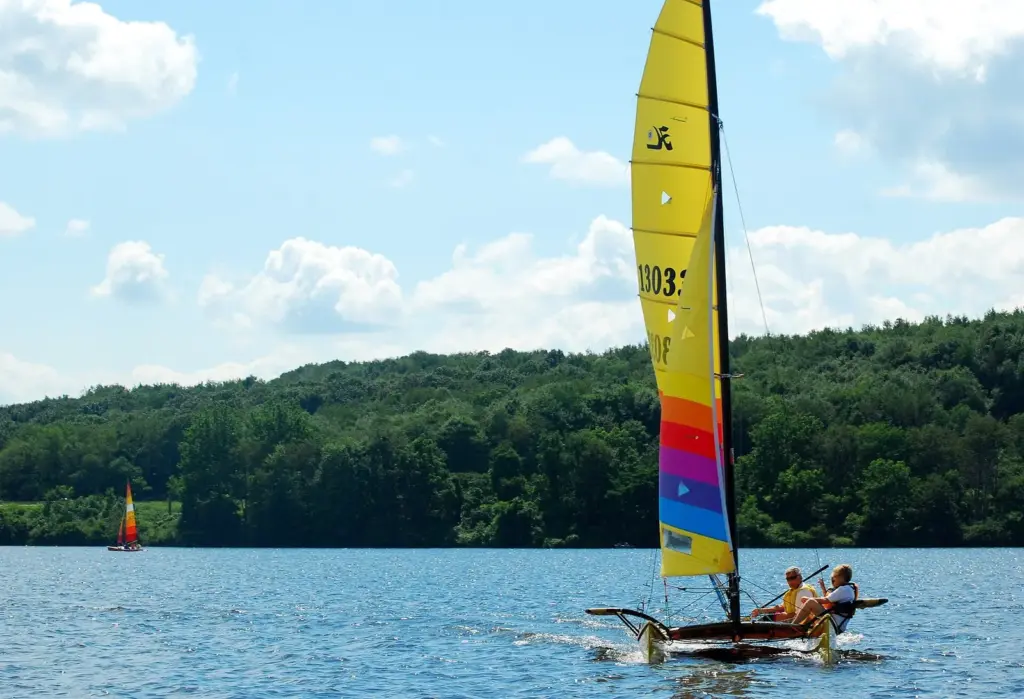
Free; spring to fall; Pittsburgh’s lake. Moraine’s 16,725 acres surround the 3,225-acre Lake Arthur, with 42 miles of shoreline, and more than a million people visit each year to sail, paddle, fish, swim, bike and rent cabins. The land was once scarred by glaciers and mining; you’d never know it now.
Plan it: Butler County, about 1 hour north of Pittsburgh, 4 hours 15 minutes from Harrisburg and 5 hours 45 minutes from Philadelphia. McConnells Mill is next door. Best for: Pittsburgh families and sailors.
17. Promised Land State Park
Free; spring to fall; the classic Poconos park. About 3,000 acres on the Pocono Plateau at 1,800 feet, Promised Land has two lakes and is surrounded by 12,464 acres of Delaware State Forest, including natural areas. Swim and paddle on the lakes, fish, camp, and in winter come back for snow and ice. Lake Wallenpaupack is a short drive away.
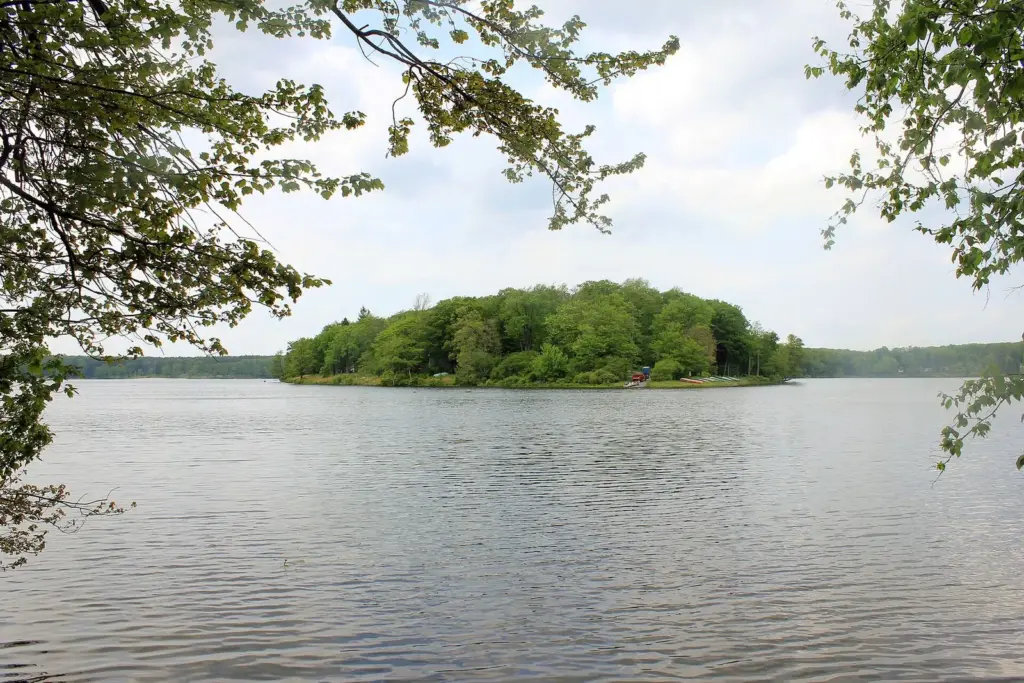
Plan it: 100 Lower Lake Road, Greentown, about 2 hours 30 minutes from Philadelphia and Harrisburg, and 5 hours 15 minutes from Pittsburgh. Book summer campsites well ahead. Best for: families and paddlers from the Philadelphia and New York areas.
18. Black Moshannon State Park
Free; summer and fall; bogs and tea-colored water. Black Moshannon covers 3,394 acres of forests and wetlands in the mountains west of State College. Its 250-acre lake is dark from the tannins of the bogs around it, and the name comes from a Lenape term meaning “moose stream.” Boardwalk trails cross the bog, where carnivorous plants and orchids grow. The park’s Civilian Conservation Corps cabins are some of the most atmospheric in the system.
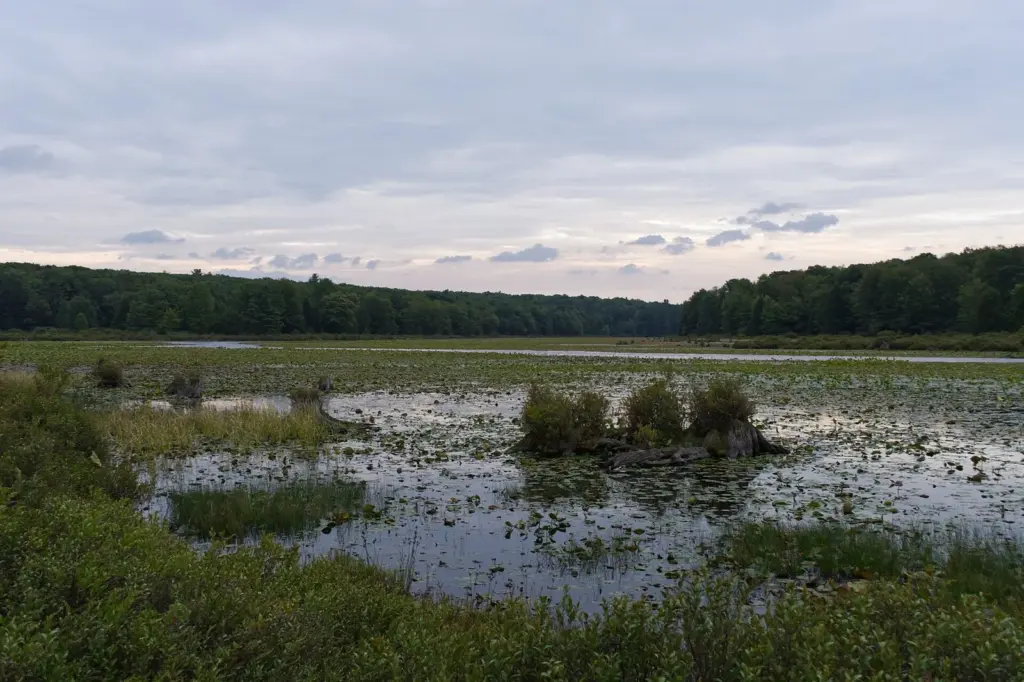
Plan it: Near Philipsburg, Centre County, about 2 hours from Harrisburg, 2 hours 45 minutes from Pittsburgh and 3 hours 45 minutes from Philadelphia. Best for: paddlers, naturalists and Penn State visitors.
19. Gifford Pinchot State Park
Free; spring to fall; Harrisburg’s lake park. A 2,338-acre full-service park in northern York County along PA 177, Gifford Pinchot is built around the 340-acre Pinchot Lake, with boating, fishing, swimming, camping and trails through reverting farm fields and woods. Its namesake was Pennsylvania’s conservationist governor and the first chief of the US Forest Service.
Plan it: Lewisberry, about 30 minutes from Harrisburg, 2 hours from Philadelphia and 3 hours 30 minutes from Pittsburgh. Best for: central Pennsylvania families.
20. Nockamixon State Park
Free; spring to fall; Philadelphia’s lake day. Nockamixon’s 5,286 acres sit in the rolling hills of upper Bucks County around Lake Nockamixon. Instead of a lake beach, it has a swimming pool, plus boating, fishing, disc golf, biking and hiking.
Plan it: 1542 Mountain View Drive, Quakertown, about 1 hour 15 minutes from Philadelphia and 1 hour 45 minutes from Harrisburg. Combine with New Hope or Doylestown. Best for: Philadelphia-area families.
Forests, history and wildlife
21. Cook Forest State Park
Free; spring to fall; old-growth giants. Cook Forest protects some of the tallest old-growth white pines and hemlocks in the East along the Clarion River. Climb the 80-foot Historic Fire Tower No. 9 for a view of 15 to 20 miles on a clear day, look over the river from Seneca Point (stay inside the fenced area on the ledges), and float the Clarion by canoe or tube in summer.
Plan it: Cooksburg, Clarion County, about 2 hours from Pittsburgh, 3 hours 15 minutes from Harrisburg and 5 hours from Philadelphia. Best for: family weekends and big-tree lovers.
22. French Creek State Park
Free; any season; the big forest near Philadelphia. French Creek’s 7,730 acres in the Schuylkill Highlands form the largest block of contiguous forest between Washington, D.C. and New York City. Its forests, lakes, wetlands and fields draw southeastern Pennsylvania to hike, fish, camp and mountain-bike, and it borders Hopewell Furnace National Historic Site, a restored iron-making village.
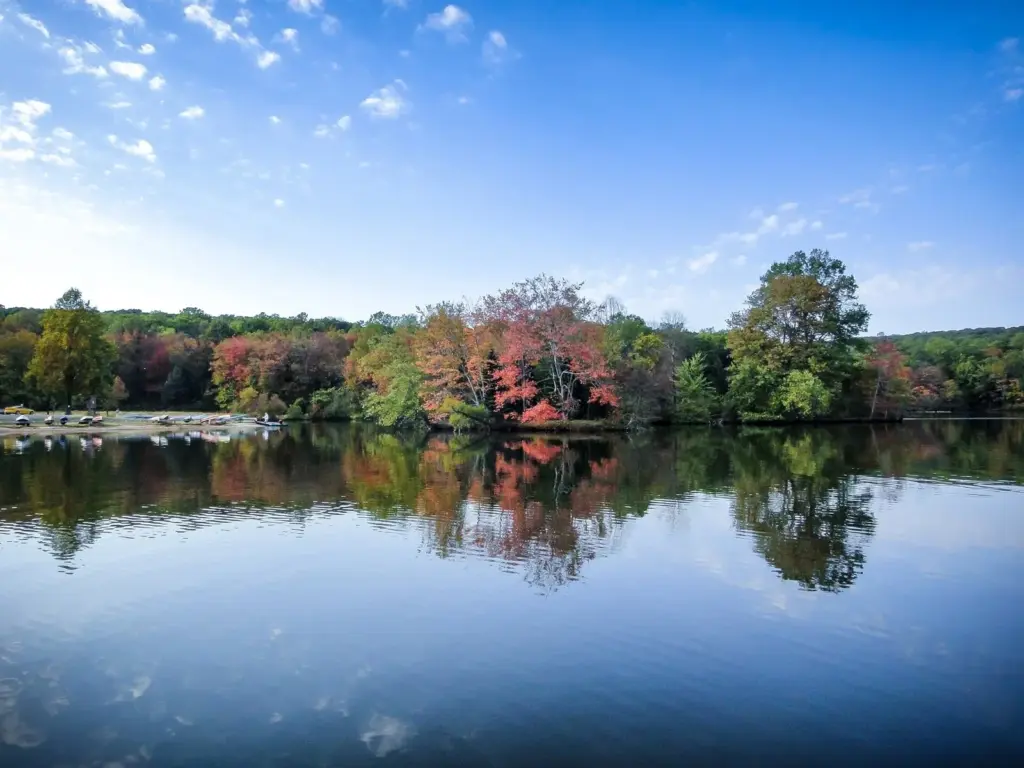
Plan it: Near Elverson, about 1 hour from Philadelphia, 1 hour 15 minutes from Harrisburg and 4 hours 30 minutes from Pittsburgh. Best for: Philadelphia hikers, campers and mountain bikers.
23. Pine Grove Furnace State Park
Free; spring to fall; the Appalachian Trail’s halfway town. At the northern tip of the Blue Ridge, Pine Grove Furnace’s 696 acres hold two mountain lakes, Laurel Lake and Fuller Lake, an old iron furnace, a rail trail and the Appalachian Trail Museum. The AT runs right through, near its traditional midpoint, and long-distance hikers pass all summer.
Plan it: Gardners, Cumberland County, about 50 minutes from Harrisburg, 2 hours 30 minutes from Philadelphia and 3 hours 15 minutes from Pittsburgh. Best for: hikers, swimmers and trail history fans.
24. Raccoon Creek State Park
Free; spring for wildflowers. Raccoon Creek’s 7,572 acres make it one of the largest and most visited parks in western Pennsylvania. It began in the 1930s as a National Park Service recreational demonstration area built by the Civilian Conservation Corps. Its Wildflower Reserve holds more than 700 plant species along 4.5 miles of trails, among the most diverse stands of wildflowers in the region.
Plan it: Beaver County, about 40 minutes west of Pittsburgh, 4 hours from Harrisburg and 5 hours 30 minutes from Philadelphia. Best for: Pittsburgh hikers, especially in April and May.
25. Parker Dam State Park
Free; spring to fall; CCC history and wilderness access. Parker Dam’s 968 acres sit within Moshannon State Forest, with a small lake, a Civilian Conservation Corps cabin district and woods recovering from a tornado. It’s also the gateway to the 50,000-acre Quehanna Wilderness, the largest wild area in the state forests.
Plan it: 28 Fairview Road, Penfield, about 2 hours 30 minutes from Pittsburgh, 2 hours 45 minutes from Harrisburg and 4 hours 30 minutes from Philadelphia. Best for: families and backpackers.
26. Sinnemahoning State Park
Free; spring to fall; deep in the PA Wilds. Sinnemahoning’s 1,910 acres sit near the center of the Pennsylvania Wilds’ steep-valley country, between ridges of state forest, and DCNR highlights its outstanding wildlife habitat. It’s a good base for wildlife watching, paddling and quiet drives in the region where Pennsylvania’s elk range.
Plan it: Cameron and Potter counties, about 3 hours from Harrisburg, 3 hours 30 minutes from Pittsburgh and 4 hours 45 minutes from Philadelphia. Best for: wildlife watchers.
27. Laurel Caverns State Park
Paid cave tours; any season. One of Pennsylvania’s newer state parks surrounds Laurel Caverns, which calls itself the state’s largest cave, with more than four miles of passages. It’s a sandstone cave, so there are no stalactites, and one of the steepest in the world. Tickets are sold on arrival, with no reservations needed.
Plan it: Near Farmington, Fayette County, about 1 hour 30 minutes from Pittsburgh. Pair with Ohiopyle. Best for: rainy days and cave fans.
28. Archbald Pothole State Park
Free; April to November. In a 150-acre park nine miles north of Scranton, Archbald Pothole is a 38-foot-deep hole drilled into the bedrock by meltwater during the last ice age, about 15,000 years ago. It’s a quick stop, but a remarkable one. The park closes for the season on the third Saturday of November and reopens on the second Friday of April.
Plan it: Lackawanna County, about 2 hours 15 minutes from Philadelphia and Harrisburg. Allow 30 minutes. Best for: geology fans on a Scranton weekend.
City parks: Philadelphia and Pittsburgh
29. Ridley Creek State Park
Free; any season; 16 miles from Center City. Ridley Creek covers more than 2,606 acres of Delaware County woods and meadows, an easy escape from Philadelphia. Trails follow the creek, and the Colonial Pennsylvania Farmstead inside the park shows life on a farm before the Revolution (it charges a fee and closes in winter).
Plan it: Newtown Square, about 35 minutes from Center City Philadelphia. Best for: a half-day walk or bike ride from the city.
30. Point State Park
Free; any season; downtown Pittsburgh. At the tip of Pittsburgh’s Golden Triangle, where the Allegheny and Monongahela rivers meet to form the Ohio, Point State Park tells the story of the Forks of the Ohio and the forts that stood here, and its big fountain is the city’s front lawn. Hunting is prohibited here, unlike in many state parks.
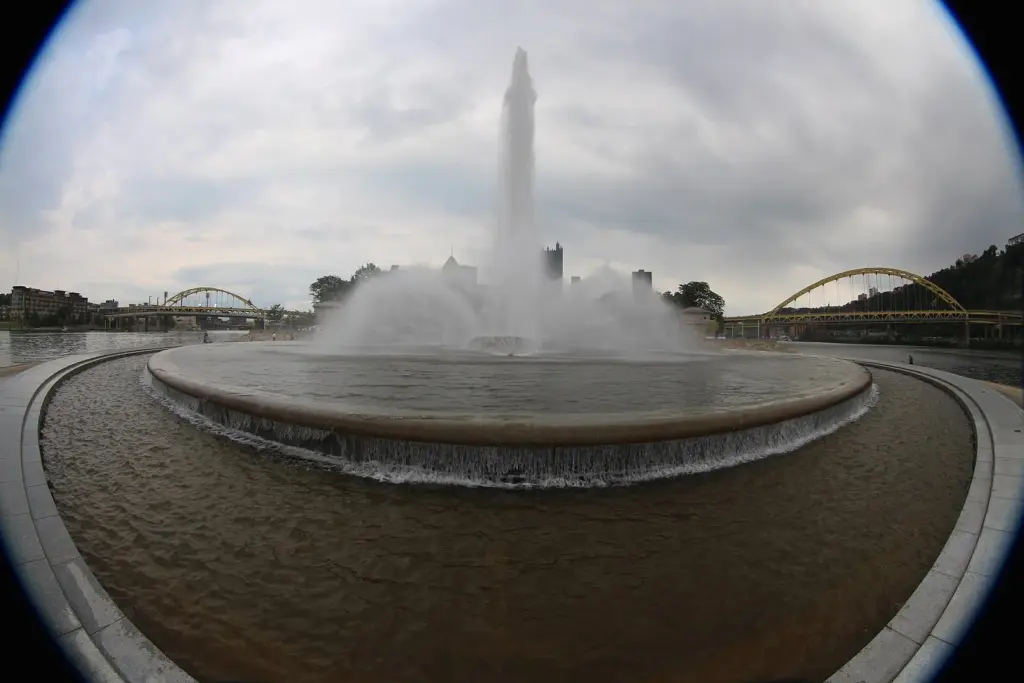
Plan it: 601 Commonwealth Place, downtown Pittsburgh. Walk from any downtown hotel. Best for: every Pittsburgh visitor.
Camping, cabins and yurts in Pennsylvania state parks
Pennsylvania state parks offer several kinds of overnight stays. Campsites range from basic tent sites to sites with electric hookups for RVs. Cabins range from rustic Civilian Conservation Corps cabins, like those at Black Moshannon and Parker Dam, to modern cabins with kitchens and bathrooms. Camping cottages and yurts sit in between: a solid roof and beds, but you usually bring your own bedding and cooking gear. Some cabins, cottages and yurts are designated as pet-friendly.
| Stay | What you get | What to bring | Best for |
|---|---|---|---|
| Campsite | A tent or RV pad, fire ring and picnic table; some sites have electric hookups | Everything: tent or RV, bedding, cooking gear | Campers on a budget |
| Camping cottage or yurt | A roofed, furnished shelter with beds, near a shared bathhouse at most parks | Bedding, cooking gear, lighting | Families who want a step up from a tent |
| Rustic cabin | A simple cabin, often built by the Civilian Conservation Corps in the 1930s, with basic furniture and a stove or fireplace | Bedding, cookware, food; check whether there’s running water | History lovers and couples |
| Modern cabin | Kitchen, bathroom, heat and furniture | Linens and towels, unless the listing says otherwise | Families and groups year-round |
Tips: book exactly when your dates open (up to 11 months ahead) for summer and October weekends; check minimum stays, which are often longer in peak season; and read what each cabin includes before you pack. Every reservation carries a $6.50 transaction fee, and changes cost $10. For tent camping on a budget, the north-central parks, such as Sinnemahoning, Parker Dam and Colton Point, are quieter and easier to book than the big lake parks near the cities.
Best Pennsylvania state parks by activity
Swimming. Presque Isle’s Lake Erie beaches are the state’s best; inland, Moraine, Pymatuning, Promised Land, Gifford Pinchot and Black Moshannon have lake beaches, Worlds End has a creek swimming area, and Nockamixon has a pool instead of a lake beach. Never swim in fast rivers such as Slippery Rock Creek at McConnells Mill.
Fishing and boating. Pymatuning, the state’s largest lake, and Moraine’s Lake Arthur are the big-water choices; Promised Land, Nockamixon, Gifford Pinchot and Black Moshannon suit kayaks and small boats. Anglers 16 and older need a Pennsylvania fishing license.
Hiking. Ricketts Glen’s Falls Trail is the classic; Worlds End connects to the Loyalsock Trail, Pine Grove Furnace sits on the Appalachian Trail, Hickory Run pairs the Boulder Field with Hawk Falls, and Leonard Harrison’s Turkey Path drops into the Pennsylvania Grand Canyon. Parker Dam is the gateway to the Quehanna Wilderness for backpackers.
Paddling and floating. Black Moshannon’s tea-colored lake and bog channels, Promised Land’s two lakes, Moraine’s sailing water and the Clarion River at Cook Forest, where summer canoe and tube floats are a family tradition.
Wildlife and wildflowers. Raccoon Creek’s Wildflower Reserve in spring, Pymatuning’s wildlife viewing areas, Presque Isle’s migrating birds, the eagles along the Susquehanna at Susquehannock, and the elk country around Sinnemahoning.
Easy access. Worlds End’s Loyalsock Canyon Vista is accessible, as are many overlooks, picnic areas and beaches; Point State Park and Ridley Creek have paved paths. Call the park office about accessible cabins and campsites before you book.
Staying safe in the parks
Pennsylvania’s parks are friendly places, but a few rules keep the trips good ones. Black bears live across most of the state: store food in your car or a bear-proof box, never in your tent. Ticks are common from spring through fall, so wear long pants on grassy and brushy trails and check yourself afterward. Cell service disappears in the northern parks and in deep gorges, so download maps and tell someone your plan.
Respect the dangerous spots: the currents at McConnells Mill, the steep and slippery Falls Trail at Ricketts Glen, the rock ledges at Cook Forest’s Seneca Point (stay inside the fence), and the Kinzua Skywalk, which closes in snow, ice, storms and high wind. In hunting seasons, mostly in fall and early winter, wear blaze orange on trails, and check the park’s page for which areas are open to hunting.
Best state parks near Philadelphia and Pittsburgh
Near Philadelphia: Ridley Creek (35 minutes), French Creek (1 hour), Nockamixon (1 hour 15 minutes), Hickory Run (1 hour 45 minutes) and Susquehannock (1 hour 45 minutes). For a weekend, Promised Land and Big Pocono are about 2 to 2.5 hours away.
Near Pittsburgh: Point State Park downtown, Raccoon Creek (40 minutes), McConnells Mill (45 minutes), Moraine (1 hour), Ohiopyle and Laurel Caverns (1 hour 30 minutes). For a weekend, Cook Forest, Pymatuning and Presque Isle are about 2 hours away.
Near Harrisburg: Gifford Pinchot (30 minutes) and Pine Grove Furnace (50 minutes), with Susquehannock, French Creek and Hickory Run within 1 hour 45 minutes.
Pennsylvania state parks by season
Fall. The peak season for color and crowds, especially in October: Worlds End, Ricketts Glen, Leonard Harrison and Colton Point, Cook Forest and the Kinzua Bridge Skywalk (through October 31, 2026). Wear orange on trails during hunting seasons.
Winter. Many parks stay open for snowshoeing, cross-country skiing, sledding and ice fishing, but some roads and facilities close. Ricketts Glen’s Falls Trail closes except to equipped ice climbers and hikers, and Archbald Pothole closes from late November to April.
Spring. Waterfalls run their strongest, and Raccoon Creek’s wildflowers peak in April and May. Trails can be muddy, so wear boots.
Summer. Lake parks (Moraine, Pymatuning, Promised Land, Gifford Pinchot, Black Moshannon) and Presque Isle’s beaches are at their best; Cherry Springs’ summer nights are prime for the Milky Way. Weekend parking fills early everywhere.
What’s changed, and what to skip
- Glen Onoko is still closed. The trail in Lehigh Gorge State Park shut in 2019 after repeated rescues and deaths; DCNR is rebuilding it and has set no reopening date.
- The Kinzua Skywalk closes after October 31, 2026 until fall 2027.
- There are 125 parks, not 121 or 124. The system has grown in recent years; older lists undercount it.
- Skip: wading or swimming at McConnells Mill (the currents are deadly), Ricketts Glen in sneakers or after dark, and arriving at Hickory Run or Ricketts Glen after 10am on an October Saturday.
Pennsylvania State Parks FAQ
How many state parks are in Pennsylvania?
DCNR’s Bureau of State Parks manages 125 state parks covering more than 300,000 acres, as of October 2026. They range from six-acre Hyner View, essentially a single overlook, to big lake and forest parks of more than 15,000 acres such as Hickory Run, Pymatuning and Moraine.
Are Pennsylvania state parks free?
Yes. Pennsylvania state parks charge no entrance or parking fee. You pay only for overnight stays and rentals, such as campsites, cabins, camping cottages and yurts, plus some pools and programs. Every reservation carries a $6.50 non-refundable transaction fee.
Can you bring dogs to Pennsylvania state parks?
Yes, in designated areas. Pets are welcome in designated day-use areas, campsites, cabins, camping cottages and yurts, and anywhere not closed to them. They must be leashed, caged or crated and attended at all times; electronic fences and shock collars aren’t allowed. Beaches and swimming areas are usually off-limits.
Which Pennsylvania state parks have cabins?
Many do, from rustic Civilian Conservation Corps cabins at parks such as Black Moshannon and Parker Dam to modern cabins at lake parks such as Moraine. Some parks also rent camping cottages and yurts. Search by park and type on the state reservation site, and book up to 11 months ahead for peak dates.
How far ahead can you reserve a Pennsylvania state park campsite?
Up to 11 months ahead, online or by phone at 888-PA-PARKS (888-727-2757), Monday to Saturday from 7am to 5pm. Popular summer and October weekends at parks such as Ricketts Glen, Promised Land and Worlds End fill quickly, so book the day your dates open.
What is the most beautiful state park in Pennsylvania?
Our pick is Ricketts Glen, for its 21 waterfalls on one trail system. Worlds End in October, Leonard Harrison’s view of the Pennsylvania Grand Canyon, Ohiopyle’s gorge and McConnells Mill’s boulder-filled valley are close behind, and Cherry Springs wins after dark.
Can you fly a drone in Pennsylvania state parks?
Only at designated sites. DCNR allows drones and other unmanned aircraft at six designated flying sites within certain state parks, and not elsewhere in the system. Check the list on DCNR’s rules page before you pack one.
Sources and How We Checked
Everything on this page was checked between September 24 and October 1, 2026 against DCNR’s official state park pages and compiled from them; we don’t claim first-hand visits. Drive times are free-flow estimates from OpenStreetMap-based routing (the Valhalla engine), rounded to the nearest 15 minutes.
- DCNR, Pennsylvania state parks: the number of parks, acreage, no entrance fee and reservations.
- DCNR, state park prices: transaction and change fees.
- DCNR, pets in parks: where pets may go and how they must be controlled.
- DCNR, rules and regulations: drones and metal detecting.
- DCNR, Ricketts Glen State Park, and the individual DCNR pages for each park listed here.
Laurel Caverns details come from the cave’s own site, and the Kinzua Bridge, Glen Onoko and Cherry Springs updates from DCNR notices from September 2026.
Pennsylvania Tourism Guide is an independent publication. We are not affiliated with DCNR, the Pennsylvania Bureau of State Parks or any park, outfitter or business named here, and no one paid to be included.
Photo Credits
- McConnells Mill covered bridge, McConnells Mill State Park: photo by Nyttend, via Wikimedia Commons (Public domain)
- F.L. Ricketts Falls, Ricketts Glen State Park: photo by User:Ruhrfisch, via Wikimedia Commons (CC BY-SA 4.0)
- Boulder Field, Hickory Run State Park: photo by Nicholas A. Tonelli from Pennsylvania, USA, via Wikimedia Commons (CC BY 2.0)
- Sailing on Lake Arthur, Moraine State Park: photo by Rona Proudfoot, via Wikimedia Commons (CC BY-SA 2.0)
- Promised Land Lake, Promised Land State Park: photo by Yinan Chen, via Wikimedia Commons (Public Domain)
- Black Moshannon Lake: photo by Molly Des Jardin, via Wikimedia Commons (CC BY 2.0)
- Hopewell Lake, French Creek State Park: photo by John Delacy, via Wikimedia Commons (CC BY 3.0)
- Fountain at Point State Park, Pittsburgh: photo by Roy Luck, via Wikimedia Commons (CC BY 2.0)